



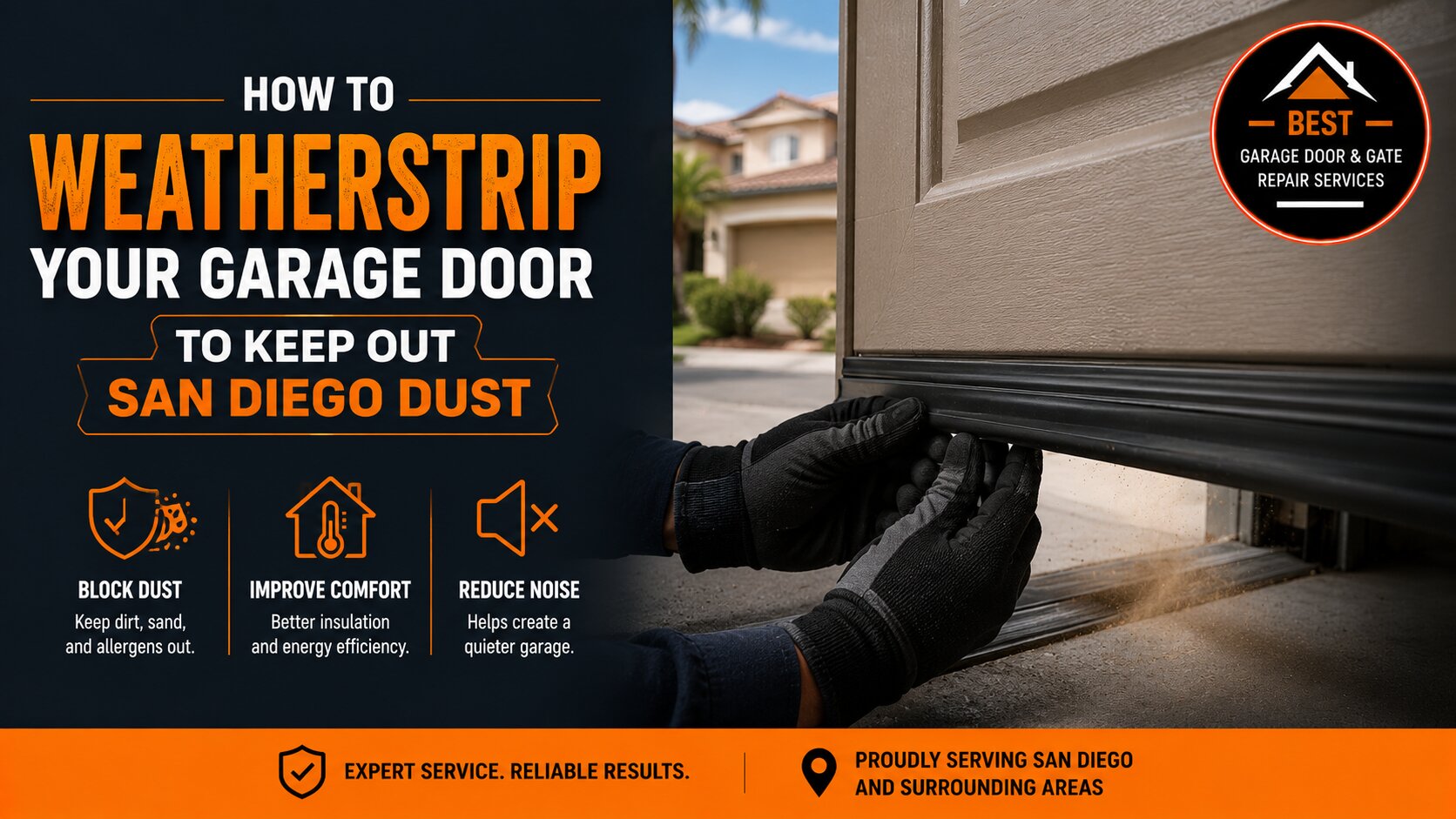
After working on garage doors across San Diego County for years, I can tell you that dust infiltration is one of the most common complaints we hear from homeowners. The fine particles blow in from our desert-adjacent climate, especially during Santa Ana wind season, and they settle on everything in your garage.
If you notice a layer of dust accumulating on your car, tools, or storage boxes, your weatherstripping is likely worn out or improperly installed. I’ve helped hundreds of local families solve this problem, and I’m going to walk you through exactly how to do it yourself.
Why San Diego Garages Need Quality Weatherstripping
Our Southern California climate creates unique challenges for garage doors. We deal with warm, dry air most of the year, which degrades rubber weatherstripping faster than in humid climates.
Add in the dust that blows through from inland areas, and you’ve got the perfect storm for a dirty garage. The salt air near coastal neighborhoods like Pacific Beach and Point Loma accelerates weatherstripping deterioration even more, similar to how Salt Air Can Cause Rust On Your Garage Door.
Good weatherstripping doesn’t just keep out dust. It also blocks out small pests, reduces street noise, and improves your garage’s temperature control during our summer heat waves.
What Type of Weatherstripping Should You Choose?
The bottom seal is your first line of defense against dust. For San Diego conditions, I recommend EPDM rubber or vinyl weatherstripping over standard rubber because they resist UV degradation and don’t crack as quickly in our intense sun.
The T-style bottom seal works best for most residential garage doors because it compresses when the door closes, creating a tight barrier against the concrete floor. We install these on about 80% of our service calls.
For the sides and top of your door, adhesive-backed weatherstripping or J-channel vinyl strips work well. Make sure whatever you choose has a thickness that matches your existing tracks and gaps, and if you need help selecting the right Garage Door Parts for your specific door model, we can guide you through the options.
How Do You Install Bottom Weatherstripping on Your Garage Door?
Installing Side and Top Weatherstripping
The perimeter seal prevents dust from entering through the gaps between your door and the frame. For adhesive-backed weatherstripping, clean the door jambs with rubbing alcohol first to ensure proper adhesion.
Cut each piece to length and peel off the backing. Press firmly into place along the entire door frame, making sure there are no gaps or bubbles.
For J-channel style strips, you’ll need to nail or screw them into the frame. Position them so the flexible lip extends toward the door and makes contact when it closes, which is an important step whether you’re working on residential or Commercial Garage Door Repair projects.
Common Weatherstripping Mistakes to Avoid
Another issue is not replacing all the weatherstripping at once. If your bottom seal is worn out, the side and top seals are probably degraded too.
Don’t forget to check the seal between individual door panels if you have a sectional door. These can develop gaps over time and need attention as well.
How Often Should You Replace Garage Door Weatherstripping?
In San Diego’s climate, weatherstripping typically lasts three to five years. If your garage faces west and gets afternoon sun in neighborhoods like Rancho Bernardo or Poway, you might need replacement sooner.
Check your weatherstripping twice a year by running your hand along the seals while the door is closed. If you feel air movement or see light coming through, it’s time for replacement.
Let Us Help Keep Your Garage Clean
Weatherstripping is one of the easiest and most cost-effective upgrades you can make to your garage door. It dramatically reduces dust infiltration and makes your garage a cleaner, more functional space.
If you’re not comfortable tackling this project yourself, or if you’ve installed new weatherstripping and still notice dust getting in, there may be alignment or structural issues with your door. Our team at Best Garage Door has the experience to diagnose and fix any garage door problem quickly, and we recommend reviewing our guide on How To Prepare For Your Garage Door Installation if you’re considering a full door replacement.
Give us a call today and we’ll make sure your garage stays clean and dust-free all year long.






Leave A Comment