



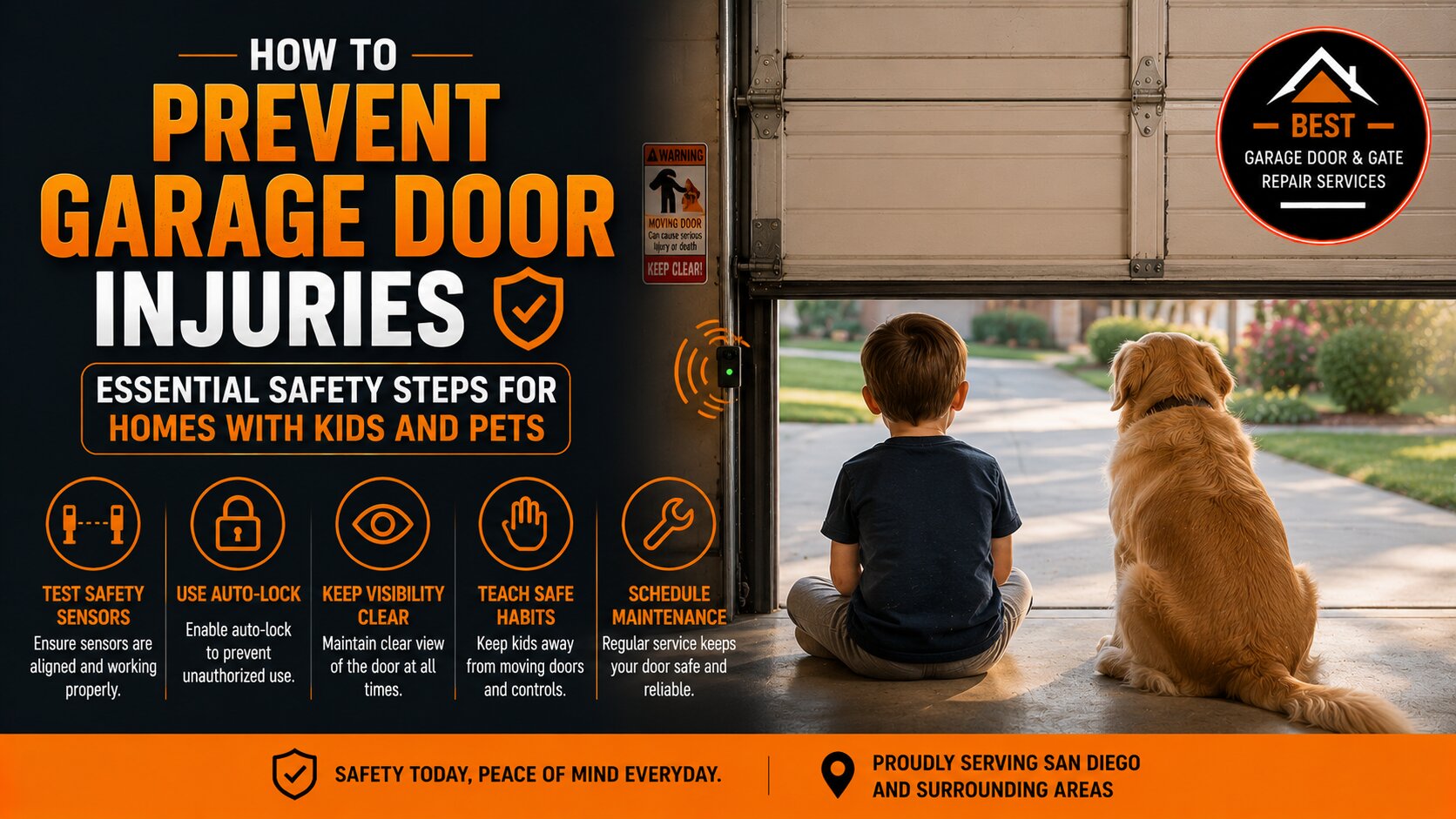
After years of serving families across San Diego, I’ve seen the aftermath of garage door accidents that could have been prevented. As a parent myself and someone who’s worked on thousands of garage doors throughout San Diego County, I understand how quickly a routine garage door operation can turn dangerous when children or pets are involved.
Garage doors are the largest moving object in most homes, with an average weight between 150 and 400 pounds. That kind of force can cause serious injury or worse, which is why I’m sharing the safety protocols our team teaches every homeowner we serve.
Why Garage Doors Pose Unique Risks to Children and Pets
Garage doors operate in predictable patterns, but children and pets don’t. Kids are naturally curious about buttons, remotes, and moving parts. Pets, especially dogs and cats, dart through openings without warning.
I’ve responded to service calls in neighborhoods from Mission Valley to Rancho Bernardo where kids climbed on doors, grabbed moving tracks, or stood directly under closing doors. Most incidents happen because homeowners don’t realize how outdated their safety features are or how quickly a door can malfunction.
What Are the Most Critical Safety Features Every Garage Door Should Have?
Modern garage doors require two essential safety mechanisms: photoelectric sensors and an auto-reverse function. The sensors, positioned at the bottom of your door tracks, create an invisible beam that stops the door if anything breaks the connection.
The auto-reverse feature stops and reverses the door when it contacts an object. These aren’t luxury features; they’re federally mandated on all garage door openers manufactured since 1993.
If your home was built before the mid-1990s and still has the original opener, you’re operating without modern safety protection. I see this frequently in older San Diego neighborhoods like North Park and Point Loma, where original equipment often remains installed for decades.
Testing Your Safety Systems Monthly
I recommend a simple two-minute safety test every month. First, test your photoelectric sensors by placing a cardboard box in the door’s path while closing. The door should immediately reverse when the beam is interrupted.
Second, test the auto-reverse by placing a 2×4 board flat on the ground where the door closes. When the door contacts the board, it should reverse within two seconds. If either test fails, call a professional immediately and stop using the door.
Teaching Kids Garage Door Safety Rules
Education prevents accidents better than any equipment. I’ve taught my own kids and recommend every parent establish these non-negotiable rules: never touch the garage door remote, never play near or under the door, and never grab onto a moving door.
One family in Pacific Beach shared that their five-year-old had been pressing the wall button repeatedly while their toddler played nearby. A simple conversation about dangers and relocating the remote eliminated the risk entirely.
Protecting Pets from Garage Door Hazards
Pets present different challenges because they can’t understand verbal warnings. Dogs and cats often race through closing garage doors, especially if they associate the garage with walks, food, or outdoor access.
Create a physical barrier or pet gate that prevents animals from accessing the garage door area when it’s in motion. Train pets to sit and wait until the door fully opens before passing through.
I’ve also installed smart garage door openers for San Diego pet owners that send phone alerts when the door operates, giving them real-time awareness even when they’re not home.
When Old Garage Door Springs Become Safety Hazards
Worn springs don’t just affect door operation. They create genuine danger because they can’t support the door’s weight properly. A door with failing springs might drop suddenly or close with excessive force that overwhelms safety sensors.
California’s warm climate actually accelerates spring wear because the constant heat affects metal tension. I replace springs every 7 to 10 years on average for San Diego homes, sometimes sooner for doors in direct sun exposure.
Professional Safety Inspections Provide Peace of Mind
Our team conducts comprehensive safety inspections covering sensors, springs, cables, tracks, and opener functions. We’ve identified dozens of serious hazards during routine maintenance visits, often for homeowners who had no idea their doors were dangerous.
If you have young children, pets, or simply want confidence that your garage door operates safely, contact Best Garage Door for a thorough safety evaluation. We’ll test every component, identify any risks, and ensure your family’s protection with solutions that fit your specific needs and budget. Whether you need residential service or Commercial Garage Door Repair, our team has the expertise to keep everyone safe. And if you’re eventually replacing your old door, consider exploring Garage Door Upcycling for creative ways to repurpose it rather than sending it to the landfill.






Leave A Comment