



After years of servicing automatic gates across San Diego County, I can tell you that photo-eye sensor problems are the number one reason homeowners call us about gates that refuse to close. These safety sensors are designed to prevent your gate from closing on vehicles, people, or pets, but when they malfunction, they can leave your property frustratingly open and vulnerable.
In my experience working throughout neighborhoods from Rancho Bernardo to Point Loma, most photo-eye issues can be diagnosed and fixed without a service call. Let me walk you through exactly how to troubleshoot these sensors like a pro.
What Are Photo-Eye Sensors and Why Do They Stop Gates from Closing?
Photo-eye sensors are a pair of devices mounted on either side of your gate opening, typically six to twelve inches above the ground. One sensor emits an infrared beam, while the other receives it. When something breaks this invisible beam, the gate’s control board automatically stops the closing cycle to prevent damage or injury.
If your Automatic Gate Opener won’t close but opens fine, the photo-eyes are almost always the culprit. The system is essentially “seeing” an obstruction, even when nothing is physically blocking the path.
Common Causes of Photo-Eye Sensor Malfunctions
The coastal humidity and salt air we deal with in San Diego create unique challenges for gate sensors. I’ve seen corrosion damage sensors in Pacific Beach properties faster than you’d expect, especially on systems without proper weatherproofing. Here are the most common issues I encounter:
How to Check If Your Photo-Eyes Are Properly Aligned
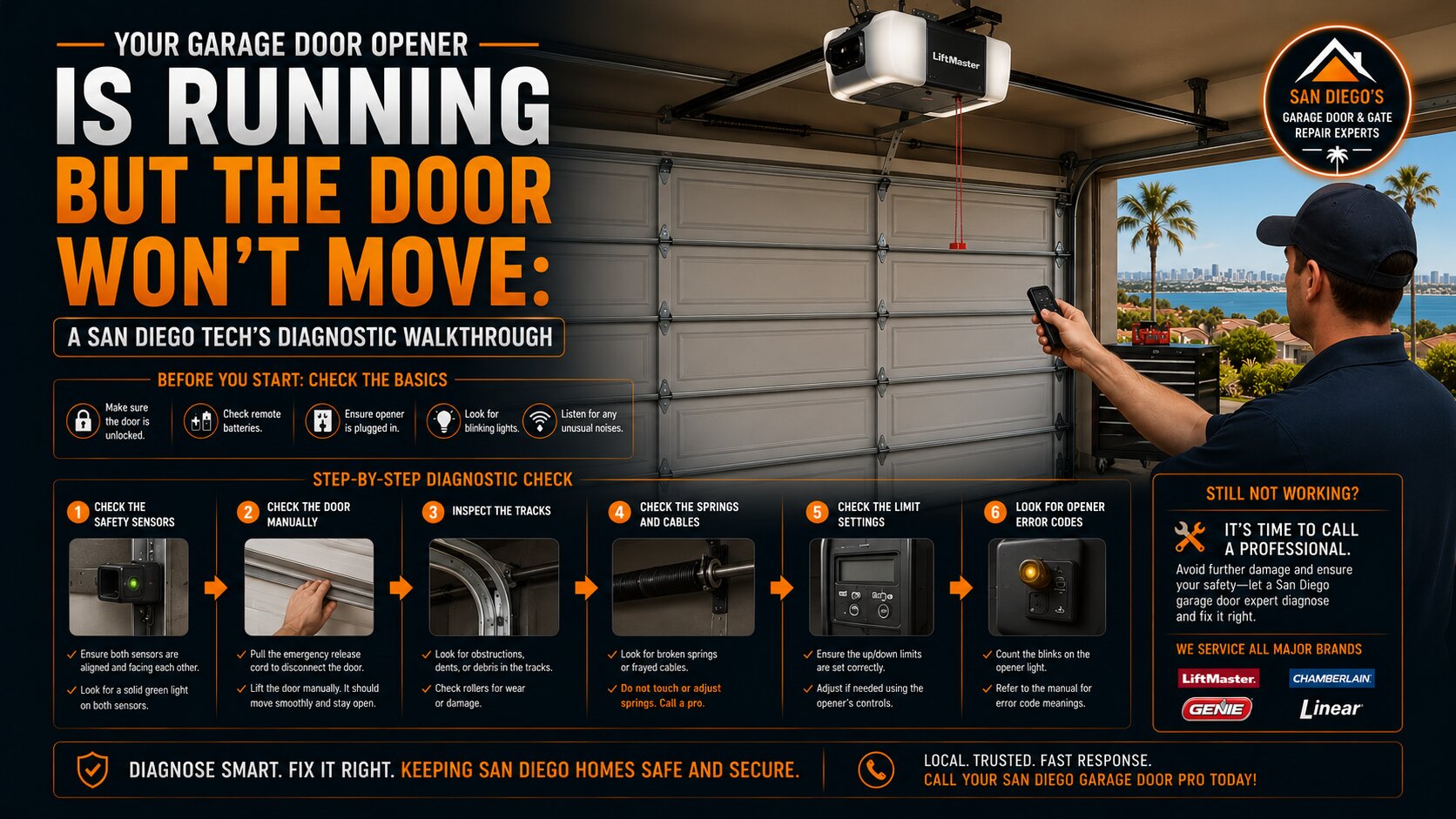
Most photo-eye sensors have indicator lights that tell you their status. You’ll typically see a solid light on both sensors when they’re properly aligned and communicating. A blinking or no light usually indicates a problem.
Start by visually inspecting both sensors. They should be mounted at exactly the same height and facing directly toward each other. Even a quarter-inch misalignment can break the beam.
Gently loosen the mounting brackets and adjust each sensor until both indicator lights are solid. This simple fix solves about 40% of the cases we respond to in Southern California.
Cleaning Your Sensors the Right Way
Never use harsh chemicals or spray cleaners directly on the sensors. If you need more than a dry cloth, slightly dampen it with water. Make sure the lenses are completely dry before testing the gate.
Why Does My Gate Work Fine in the Morning But Not in the Afternoon?
If your gate only malfunctions during specific times of day, direct sunlight is likely overwhelming the sensor’s infrared receiver. This is particularly common on west-facing gates during late afternoon in neighborhoods like Mission Valley and Hillcrest.
You can install sun shields or visors above the sensors to block direct light. Alternatively, adjusting the sensor angle slightly downward often resolves the issue without compromising safety coverage. Just like Keeping Your Garage Cool During The Summer Heat, protecting your sensors from direct sun exposure can prevent many operational issues.
Checking the Wiring and Connections
Our coastal climate causes wire connections to corrode faster than in drier regions. Open the sensor housings and inspect the wire connections for green corrosion, loose terminals, or damaged insulation.
Tighten any loose connections and clean corroded terminals with a wire brush. If wires are damaged or severely corroded, they’ll need professional replacement to ensure reliable operation. Similar to issues that cause problems with Commercial Garage Door Repair, electrical connection failures require prompt attention to prevent further damage.
Testing Your Sensors After Troubleshooting
When to Call Best Garage Door for Professional Help
I’ve been troubleshooting automatic gates throughout San Diego for years, and I know when a DIY fix ends and when safety becomes a concern. If your sensors won’t align, the indicator lights never come on, or your gate continues closing despite the safety beam being broken, you’re dealing with a more serious electrical or control board issue.
Our team at Best Garage Door has the diagnostic tools and replacement parts to get your gate functioning safely again. Don’t leave your property unsecured or risk damaging your gate system with guesswork. Just as you wouldn’t ignore Why Did My Garage Door Come Off The Track, you shouldn’t delay addressing photo-eye sensor problems. Give us a call, and we’ll have a technician to your location ready to restore your peace of mind.






Leave A Comment