



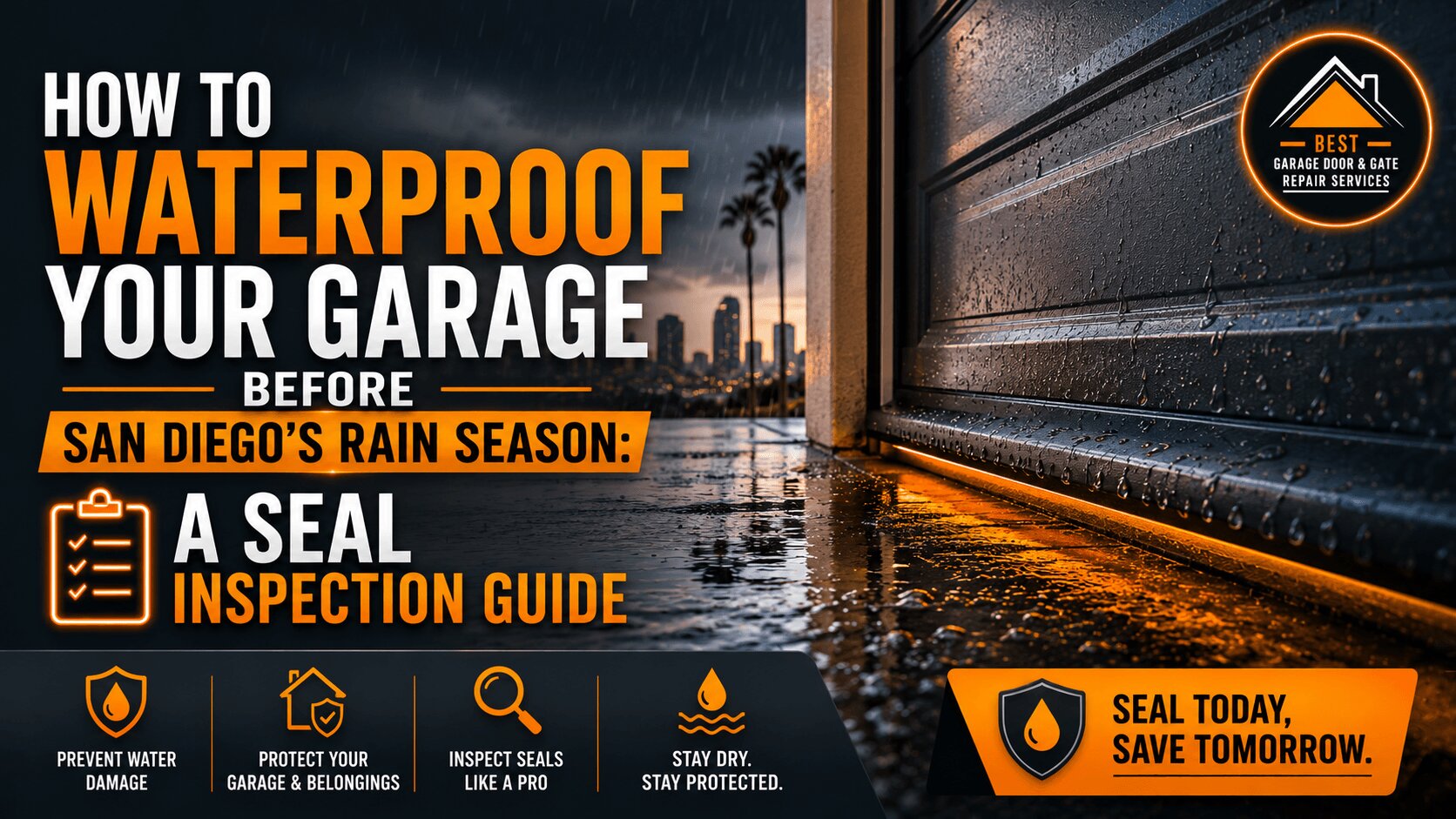
After serving San Diego homeowners for years, I’ve seen firsthand how our occasional heavy rainstorms expose garage vulnerabilities that go unnoticed during dry months. While we don’t experience rain often in Southern California, when it arrives, an unsealed garage can lead to water damage, mold growth, and costly repairs that could have been prevented with a simple inspection.
I’ve helped countless homeowners discover leaks only after water has already damaged their belongings or created dangerous electrical hazards. The good news is that preparing your garage for rain season takes just a few hours and can save you thousands in water damage remediation.
Why San Diego Garages Are Vulnerable to Water Intrusion
Many people assume rain preparation isn’t necessary in our climate, but San Diego’s unique weather patterns create specific challenges. Our long dry periods cause seals and weatherstripping to crack and deteriorate from sun exposure and temperature fluctuations.
When the marine layer brings moisture and rain finally arrives, these compromised seals fail immediately. I’ve responded to emergency calls in neighborhoods from Point Loma to Rancho Bernardo where homeowners discovered their garage seals had completely disintegrated during the first significant rainfall.
What Parts of Your Garage Door Need Seal Checks?
Your garage has four critical seal points that require inspection before rain season. The bottom seal (also called the threshold seal) is your primary defense against water entering under the door, and it’s the most common failure point I encounter.
How to Inspect Your Garage Door Bottom Seal
Close your garage door and look for light coming through underneath. Any visible light means water can enter during heavy rain, which we often experience during January through March in San Diego County.
Run your hand along the bottom seal to check for cracks, brittleness, or missing sections. A healthy seal should feel flexible and pliable, not hard or crumbly. If you can easily tear pieces off with your fingers, Garage Door Parts Replacement is overdue.
I also recommend the “hose test” that I perform for my customers. Spray water at the base of your closed garage door for several minutes and check inside for any water penetration. This simple test reveals problems before the first storm arrives.
Checking Side and Top Seals for Weatherproofing
Stand inside your closed garage and examine where the door meets the frame on both sides and across the top. Look for gaps, compressed weatherstripping, or areas where the seal has pulled away from the mounting surface.
These seals protect against wind-driven rain, which can be significant during Santa Ana wind events that push storms into our area. I’ve seen side seal failures allow water to stream down interior walls, damaging drywall and creating electrical hazards near outlets and switches.
Do Garage Door Seals Need Replacement Before Every Rain Season?
However, seals on south-facing garages deteriorate faster due to intense UV exposure. If your garage faces south or west, I recommend inspections twice yearly and expect to replace seals on the shorter end of their lifespan.
Additional Water Entry Points Beyond Door Seals
These often-overlooked areas can undermine even perfect door seals, whether you have a residential or Commercial Garage Door system.
What Products Work Best for San Diego Garage Door Seals?
I recommend vinyl or EPDM rubber seals for our climate because they resist UV degradation better than standard rubber compounds. These materials maintain flexibility through our temperature swings and don’t become brittle as quickly under constant sun exposure.
Avoid cheap replacement seals from big box stores. In my experience, they fail within a year. Quality seals cost slightly more upfront but last significantly longer and provide better water protection when California storms arrive, similar to how choosing Sustainable Garage Door Materials requires upfront investment for long-term benefits.
Professional Garage Seal Inspection and Replacement
If you discover damaged seals or want professional verification that your garage is rain-ready, our team at Best Garage Door provides comprehensive seal inspections and replacements. We’ve helped thousands of San Diego homeowners protect their garages from water damage, and we can assess your specific situation with the expertise that comes from years of local service.
Don’t wait until the first storm reveals a problem. Contact Best Garage Door today to schedule a pre-season inspection and ensure your garage stays dry all winter long. Just like learning How To Prepare For Your Garage Door Installation, proper preparation now prevents costly problems later.





Leave A Comment