



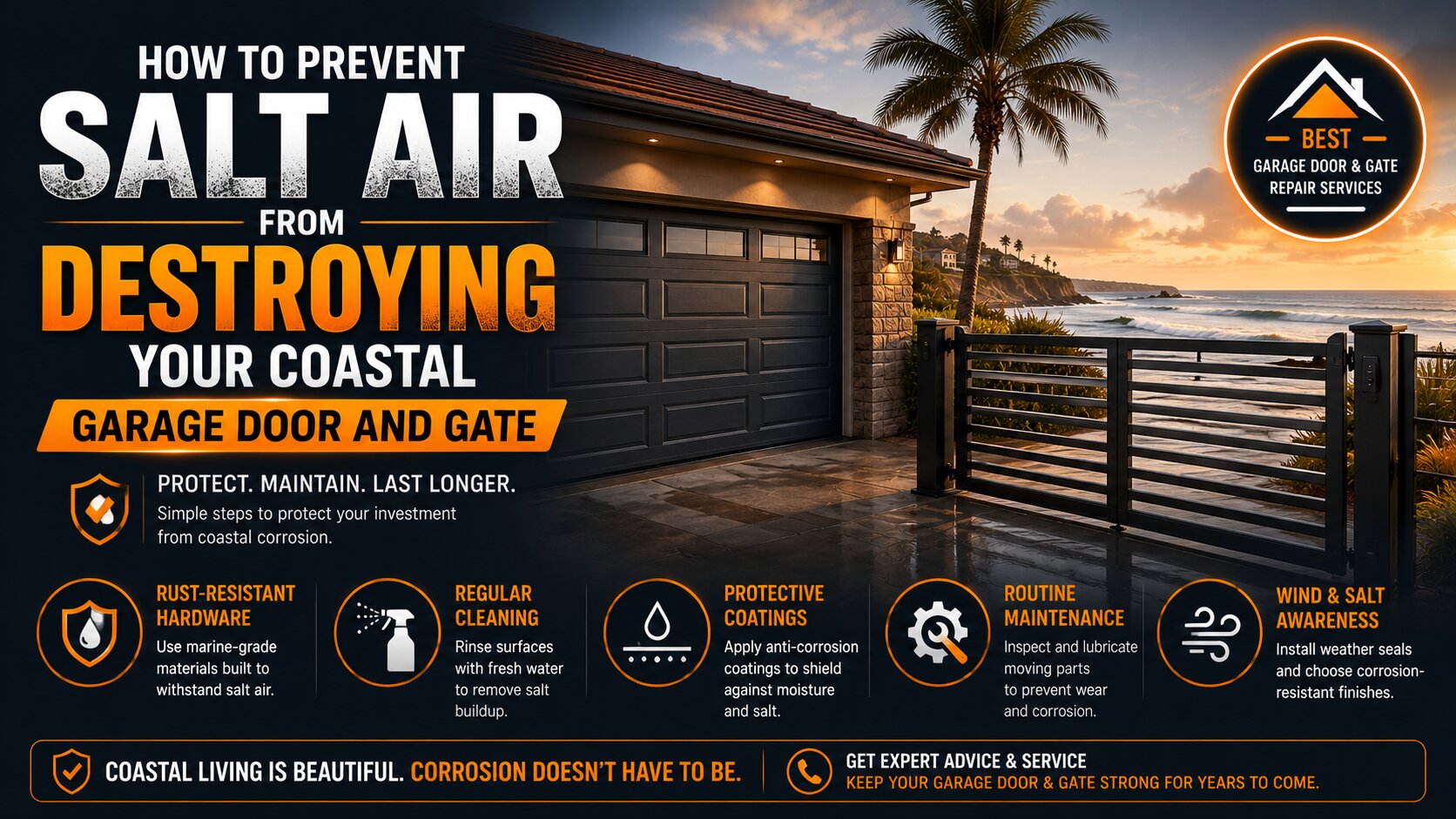
Why Ocean Air Is Your Garage Door’s Worst Enemy
After two decades of repairing garage doors and gates in San Diego’s coastal neighborhoods, I can tell you that salt air is the single most destructive force our equipment faces. The corrosion I’ve seen in homes just blocks from the ocean can be shocking.
Salt particles carried by ocean breezes create a relentless attack on metal components. These microscopic particles absorb moisture from the air and create an electrolytic reaction that accelerates rust formation at an alarming rate.
If you live in Pacific Beach, Mission Beach, Ocean Beach, La Jolla, Coronado, or Point Loma, your garage door needs specialized maintenance that homes just a few miles inland simply don’t require.
Which Components Corrode First in Coastal Areas?
Steel garage door panels are the most visible victims of salt air damage. I’ve replaced entire door sections on Coronado homes where rust has eaten through the metal in just five years, something that would take twenty years inland.
The hardware suffers even faster deterioration. Hinges, rollers, and mounting brackets are constantly flexing and moving, which cracks protective coatings and exposes bare metal to corrosive elements.
Tracks and springs face similar challenges. Steel tracks can develop rust pitting that causes rollers to bind and create That Grinding Sound From Salt Air Corrosion you might be hearing. Torsion springs, under constant tension, corrode from the inside out where you can’t see the damage until they fail.
Gate hardware is equally vulnerable. Chain-link gates, wrought iron installations, and steel gate posts all face accelerated deterioration in Southern California’s coastal climate.
How Often Should You Rinse Away Salt Buildup?
Fresh water rinsing is your first line of defense, and it’s simpler than most homeowners realize. If you’re within a half-mile of the ocean, you should rinse your garage door and gate hardware monthly at minimum.
I recommend a thorough rinse with a garden hose every two weeks during summer months when salt concentration in the air is highest. Focus on hinges, tracks, rollers, and any exposed hardware where salt accumulates.
After rinsing, wipe down metal surfaces with a clean microfiber cloth to prevent water spots that can trap salt residue.
What Are the Best Rust-Prevention Products for Coastal Garage Doors?
Should You Replace Steel Components with Corrosion-Resistant Alternatives?
If you’re installing a new garage door or gate in Pacific Beach, Ocean Beach, or similar coastal areas, choosing the right materials from the start saves thousands in future repairs. Powder-coated steel offers significantly better corrosion resistance than standard painted finishes.
Aluminum and fiberglass composite doors are even better options for extreme coastal exposure. I’ve seen aluminum doors thirty years old near Point Loma that still look fantastic with minimal maintenance.
Stainless steel hardware costs more upfront but virtually eliminates rust concerns. For gates especially, stainless steel hinges, chains, and fasteners are worth the investment.
Galvanized or zinc-plated springs and tracks also provide superior corrosion resistance compared to Standard Commercial Garage Door Components.
Creating Your Coastal Maintenance Schedule
Protect Your Investment with Proactive Maintenance
Living near California’s beautiful coastline shouldn’t mean accepting garage door and gate failure as inevitable. With the right maintenance approach, your equipment can last just as long as it would anywhere else.
I’ve seen too many La Jolla and Mission Beach homeowners face expensive emergency repairs that proper maintenance would have prevented. The time you invest in regular care pays dividends in equipment longevity and reliability.
If you’re unsure about the condition of your coastal garage door or gate, or if you’re already seeing rust and corrosion, contact us at Best Garage Door for a thorough inspection. We’ll assess the damage, recommend the most cost-effective solutions, and help you establish a maintenance routine that keeps your equipment running smoothly for years to come. For properties requiring complete replacement, our experts can help you select New Garage Doors With Corrosion Resistant Materials that will stand up to coastal conditions. Whether you need better insulation for your workspace or just want to reduce noise transfer, consider Soundproofing Your Garage Door For Additional Protection.







Leave A Comment