



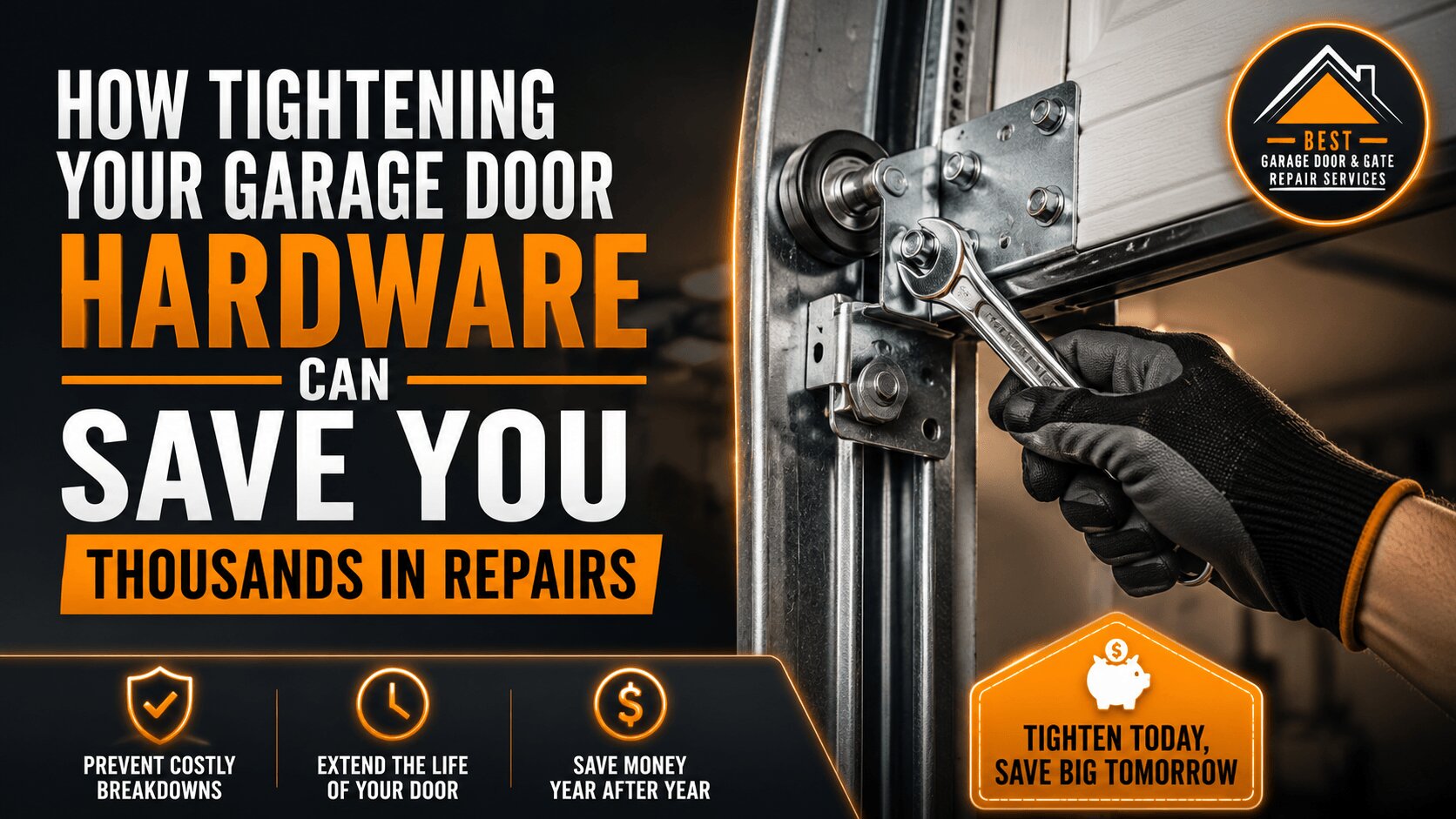
After working on garage doors throughout San Diego for years, I’ve learned that the simplest maintenance tasks often prevent the most expensive repairs. One of those tasks is tightening your garage door hardware, something that takes less than an hour but can extend your door’s lifespan by years.
I can’t tell you how many service calls our team receives that could have been avoided with a socket wrench and 30 minutes of attention. Let me share what I’ve learned about this often-overlooked maintenance step and how it can save you serious money.
Why Does Garage Door Hardware Loosen Over Time?
Garage door hardware loosens naturally due to constant vibration and movement. Every time your door opens and closes, it creates subtle movements that gradually work bolts, nuts, and screws loose from their original positions.
Here in Southern California, we see this happen faster than in many other regions. The combination of our coastal humidity, salt air near areas like Pacific Beach and Ocean Beach, and temperature fluctuations accelerates the loosening process. A typical garage door cycles 1,500 times per year, which means thousands of opportunities for hardware to work itself loose.
I’ve responded to emergency calls in Mission Valley and Rancho Bernardo where a single loose bolt caused chain reactions that damaged rollers, bent tracks, and even cracked door panels. These repairs cost hundreds or thousands of dollars, yet they started with a Garage Door Parts component like a $0.50 bolt that needed tightening.
What Hardware Should You Check and Tighten?
Not all hardware requires the same attention. Based on our experience servicing homes across San Diego County, here are the critical points I recommend checking every six months:
I always start at the top of the door and work my way down systematically. This ensures I don’t miss anything and helps me spot other potential issues like worn rollers or fraying cables.
How Often Should Homeowners Tighten Garage Door Hardware?
You should inspect and tighten your garage door hardware every six months as part of routine maintenance. Homes with heavy door usage or exposure to harsh weather may need quarterly checks.
In San Diego neighborhoods close to the coast like Point Loma, I recommend checking hardware more frequently. The salt air accelerates corrosion, which can hide loose connections until they become serious problems. During Santa Ana wind season, the extra strain on your door system can also loosen hardware faster than usual.
Our team has found that consistent six-month maintenance catches about 80% of potential problems before they become expensive repairs. It’s the single best investment of time you can make for your garage door.
The Right Tools and Technique for Tightening Hardware
The key is snug, not overtight. I’ve seen homeowners strip bolt heads or crack brackets by applying too much torque. Tighten each fastener until it’s firm and seated, then give it just a quarter turn more.
Always disconnect your garage door opener before working on the door. This prevents accidental activation while you’re inspecting hardware. I also recommend working with the door closed to reduce tension on most components, similar to the precautions you should take when learning How To Secure Your Garage Door During A Power Outage.
Warning Signs That Hardware Has Been Loose Too Long
Sometimes homeowners call us after loose hardware has already caused damage. Watch for these red flags that indicate you’ve waited too long between maintenance checks:
If you notice any of these symptoms, check your hardware immediately. What starts as a loose bolt can quickly escalate into bent tracks, broken rollers, or even a door that comes completely off track, and you may need to Replace Your Garage Door Springs Warning Signs if the damage affects the spring system.
Let Our San Diego Team Help Maintain Your Investment
Regular hardware tightening is something most homeowners can handle, but there’s no shame in calling professionals. Our team at Best Garage Door has seen every possible scenario across Hillcrest, North Park, Poway, and throughout the region.
If you’re unsure about DIY maintenance or notice something that doesn’t look right, give us a call. We’d rather help you prevent a problem than repair expensive damage later. Your garage door is a significant investment, and a little attention to those bolts and screws goes a long way toward protecting it.





Leave A Comment