



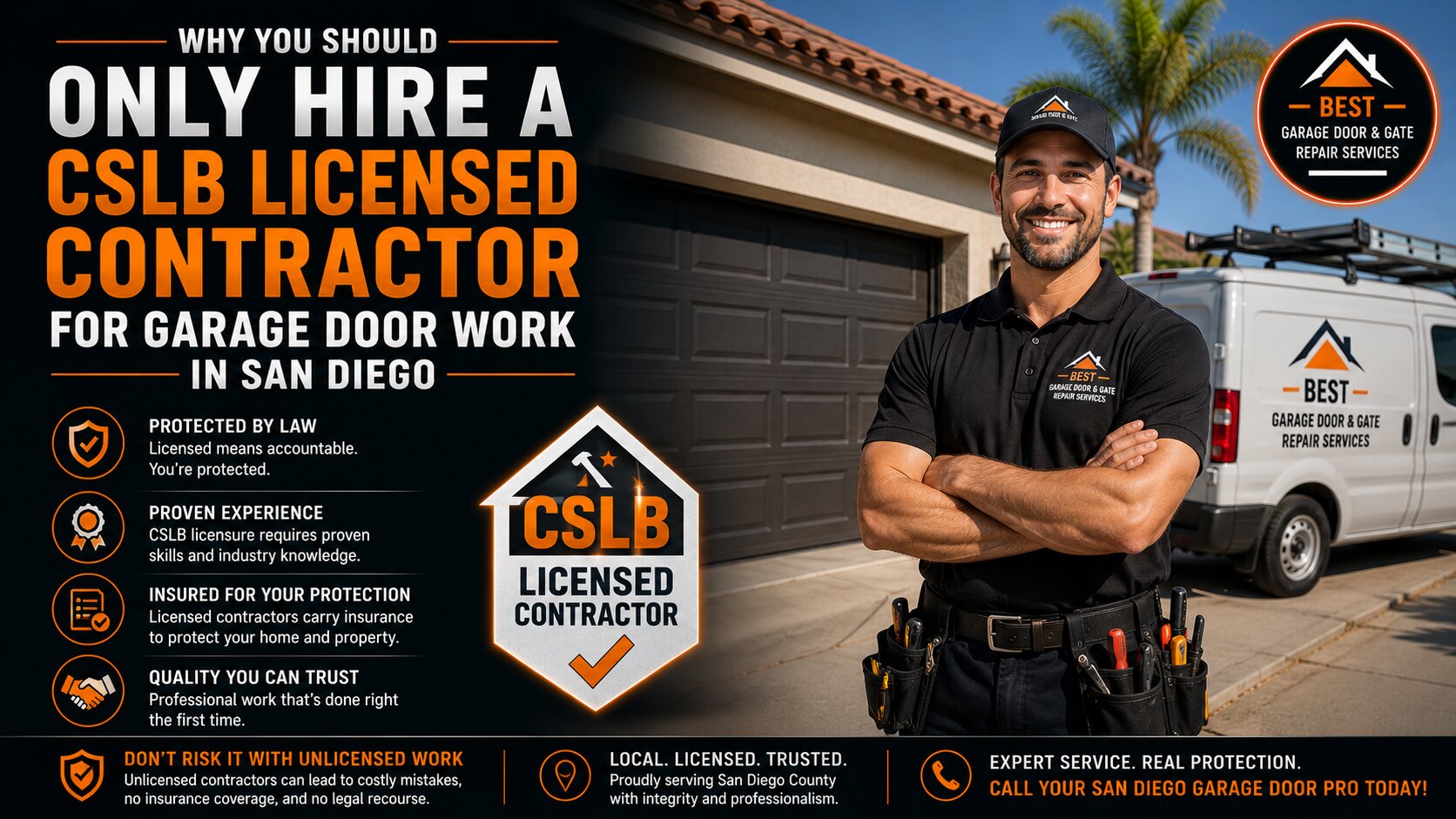
I have seen the aftermath of unlicensed garage door installations more times than I care to count. Last month, a homeowner in Mission Valley called us in a panic after a handyman’s spring installation failed catastrophically, sending the door crashing down and damaging two vehicles. This wasn’t just a costly mistake; it was a preventable disaster that happened because the homeowner didn’t verify the contractor’s CSLB license.
As the owner of Best Garage Door & Gate Repair Services (CSLB #1071980), I’m writing this to help San Diego homeowners understand why contractor licensing isn’t just bureaucratic red tape. It’s your primary protection against dangerous installations, legal liability, and financial loss.
What Does CSLB Licensing Actually Mean?
The California Contractors State License Board (CSLB) requires contractors to pass comprehensive exams, prove technical competency, maintain insurance, and demonstrate financial responsibility. When you hire us or any properly licensed contractor, you’re getting someone who has met California’s strict requirements for performing construction work safely and legally.
Our license number is #1071980, and I encourage every homeowner to verify any contractor’s license at www.cslb.ca.gov before signing a contract. This simple step takes less than two minutes and can save you thousands of dollars in problems down the road.
California law requires a CSLB license for any project exceeding $500 in combined labor and materials. Since most garage door installations and repairs far exceed this threshold, licensing isn’t optional; it’s legally mandatory.
The Hidden Dangers of Unlicensed Garage Door Work
Garage door springs operate under extreme tension, storing enough force to lift doors weighing 150 to 400 pounds. When someone without proper training attempts Garage Door Parts replacement, they’re working with components that can cause serious injury or death if mishandled.
I’ve responded to emergency calls where unlicensed workers installed springs incorrectly, creating ticking time bombs in people’s garages. Beyond immediate safety risks, unlicensed work often violates manufacturer specifications, meaning your expensive new door or opener may not function as designed.
Can Homeowners Be Held Liable for Hiring Unlicensed Contractors?
Yes, and this surprises many San Diego homeowners. When you hire an unlicensed contractor, you take on risks that most people never consider until something goes wrong.
The Legal and Safety Risks at a Glance
Here’s what you’re risking when you hire an unlicensed handyman for garage door or gate work:
How to Verify a Contractor’s License Before Hiring
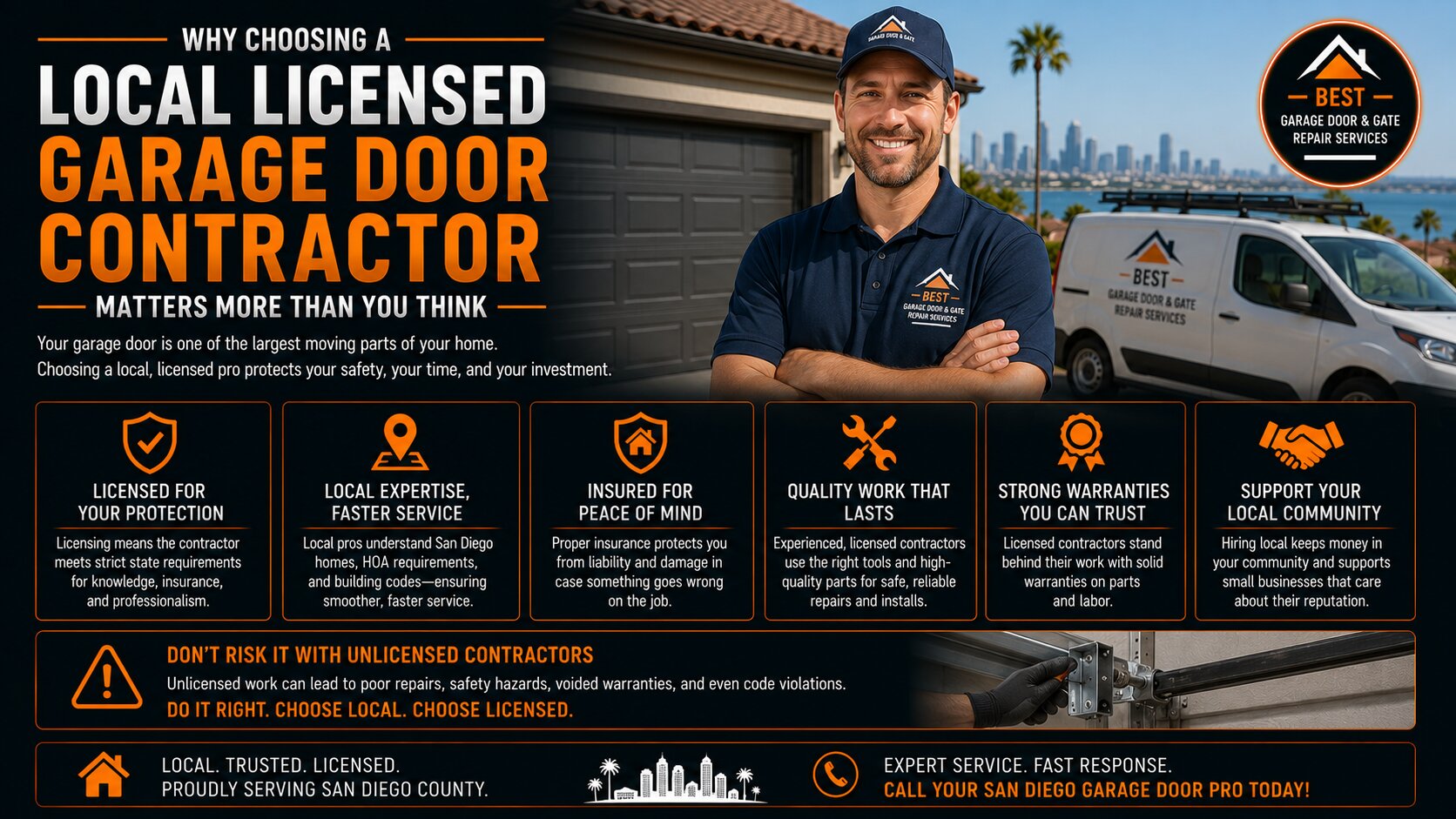
Work With Licensed Professionals Who Stand Behind Their Work
When we complete a garage door installation or repair in San Diego County, our license number goes on the paperwork, and our reputation stands behind every job. That accountability matters when you’re trusting someone to work on a system that cycles through your home’s largest opening dozens of times daily, whether for residential properties or Commercial Garage Door Repair applications.
At Best Garage Door & Gate Repair Services, we’ve built our business on doing things the right way: proper licensing, comprehensive insurance, manufacturer-certified training, and installations that meet or exceed California building codes. Contact us for a free estimate from a team that’s properly licensed, bonded, and insured to protect both your home and your family.





Leave A Comment