




After nearly two decades serving San Diego homeowners, I can tell you that one of the most common calls we receive starts with “my garage door won’t open.” Nine times out of ten, we’re dealing with a broken spring. But here’s what surprises most people: not all garage door springs are created equal, and knowing which type you have can save you time, money, and frustration when something goes wrong.
Understanding your spring system isn’t just technical knowledge. It’s practical information that helps you communicate better with repair technicians, budget appropriately for maintenance, and recognize safety concerns before they become emergencies.
What Are Torsion Springs and Where Are They Located?
Torsion springs are thick, tightly wound coils mounted horizontally on a metal shaft directly above your garage door opening. They work by twisting and storing energy as the door closes, then releasing that energy to help lift the door when it opens.
These springs are the workhorses of modern garage door systems. Most homes built in Southern California over the past twenty years use torsion springs because they’re more durable, safer, and better suited for heavier doors.
If you stand inside your garage and look up at the closed door, torsion springs will be clearly visible running parallel to the door along the top. You’ll typically see one or two Garage Door Springs (sometimes more on very heavy doors) wound around a shaft with cables running down both sides.
What Are Extension Springs and How Do They Work?
Extension springs are long, stretched coils that run perpendicular to the door, mounted above the horizontal tracks on both sides of your garage door. They expand and contract as your door operates, stretching when the door closes and contracting to help lift it when opening.
These springs are common in older San Diego homes, particularly those built before the 1990s. They’re also frequently found in garages with low headroom where torsion spring systems won’t fit.
To identify extension springs, look along the upper tracks on each side of your door. You’ll see a long spring with a safety cable running through the center, attached to the track bracket and the door itself.
Which Spring System Does Your Home Have?
In our experience working throughout San Diego County, from Pacific Beach to Rancho Bernardo, we’ve noticed clear patterns. Newer developments in areas like Mission Valley and Poway almost exclusively use torsion systems. Older neighborhoods in North Park and Point Loma often still have their original extension spring setups.
The weight and size of your door also provide clues. Two-car garage doors and insulated doors typically require torsion springs because they handle the weight more efficiently.
Key Differences That Matter to Homeowners
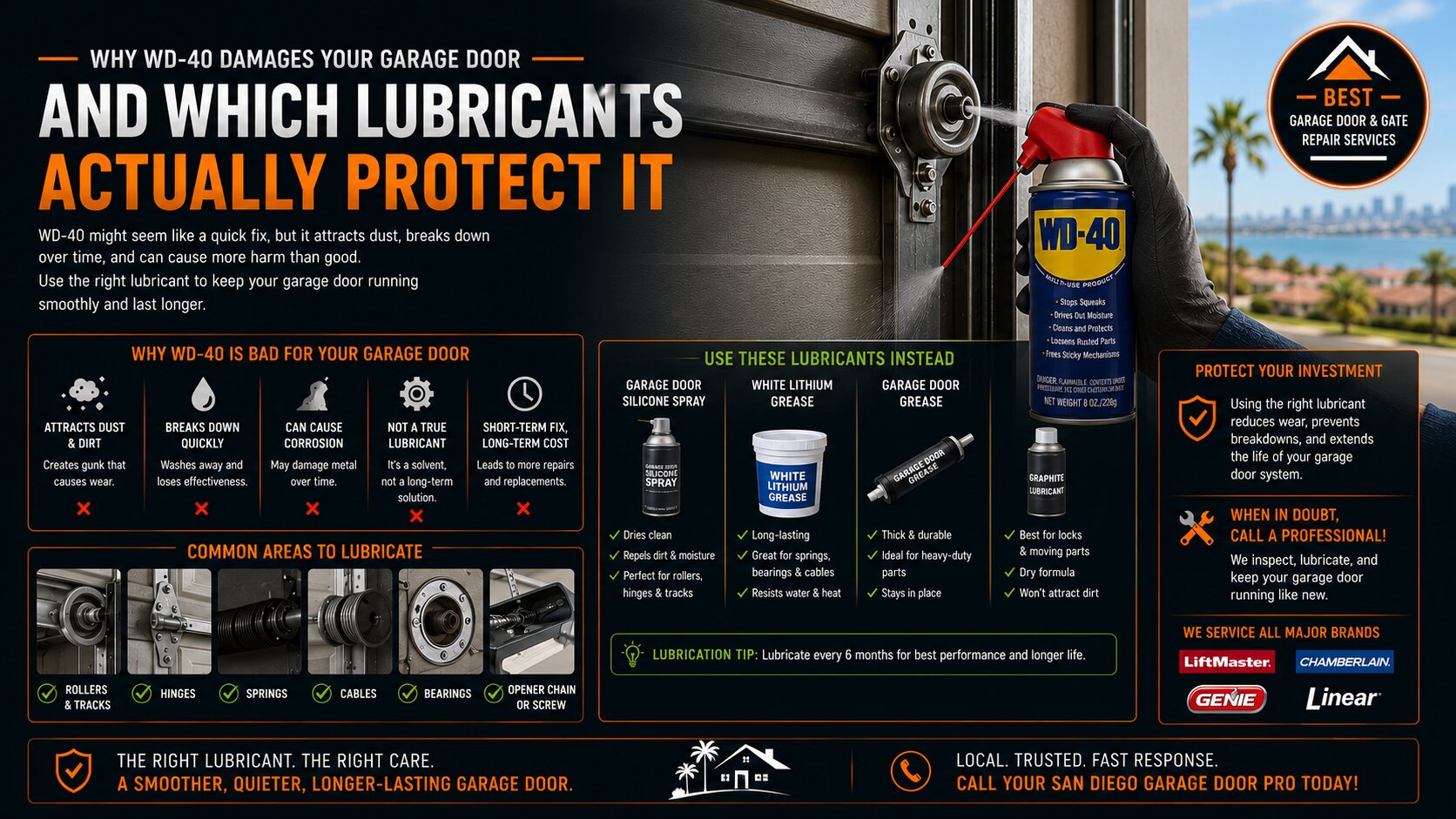
In San Diego’s coastal climate, particularly near Ocean Beach or Point Loma where salt air accelerates corrosion, both systems benefit from annual lubrication and inspection, similar to the maintenance required for Commercial Garage Door Systems.
Signs Your Springs Need Professional Attention
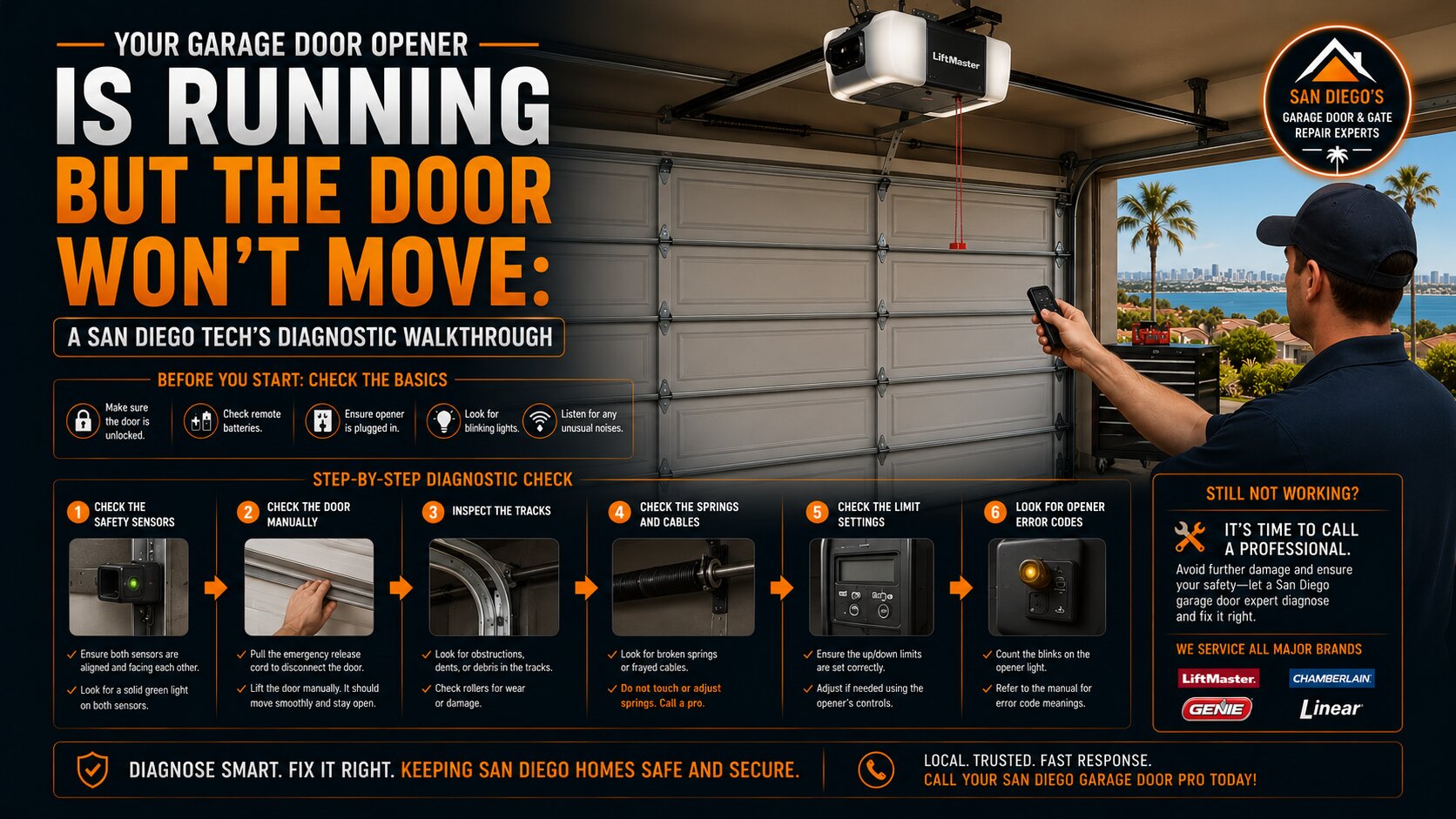
Regardless of which system you have, certain warning signs demand immediate attention. A door that won’t open, opens only partway, or crashes down when closing indicates spring failure or malfunction.
Visual gaps in torsion springs or stretched, deformed extension springs mean replacement is overdue. Loud banging noises, especially during California’s warm summer months when metal expands, often signal a spring has snapped.
Uneven door movement, where one side rises faster than the other, suggests one spring is weaker or broken. This creates dangerous stress on your opener and other hardware, which are all Warning Signs Every Homeowner Should Know.
Let Our Team Handle Your Spring System
Spring replacement isn’t a DIY project. These components are under extreme tension and require specialized tools and training to service safely. I’ve seen too many injury attempts from well-meaning homeowners who underestimated the danger.
Whether you have torsion or extension springs, our team at Best Garage Door has the experience and equipment to diagnose, repair, or replace them properly. We serve all of San Diego County with same-day emergency service because we know a broken spring means your car is trapped and your schedule is disrupted.
Contact Best Garage Door today for a free inspection. We’ll identify your spring system, assess its condition, and provide honest recommendations to keep your garage door operating safely and reliably. We also offer guidance on Sustainable Garage Door Materials And Eco-Friendly Options for homeowners looking to make environmentally conscious choices.



Leave A Comment