



I’ve responded to hundreds of service calls across San Diego where homeowners insist their garage door remote just died, even after replacing the battery. After working in this industry for years, I can tell you that battery issues are actually the least common cause of remote failure.
In fact, about 70% of the “dead remote” calls our team handles in neighborhoods from Point Loma to Rancho Bernardo have nothing to do with batteries at all. Let me walk you through the real culprits and how to fix them.
The Antenna Connection Is Compromised
Your garage door opener has an antenna wire hanging from the motor unit, and when this wire gets damaged, bent, or disconnected, your remote signal won’t reach the receiver. I see this constantly in San Diego County homes, especially after homeowners reorganize their garage or accidentally bump the antenna while storing surfboards or bikes.
Check that the antenna wire is hanging straight down and isn’t wrapped around anything metal. Metal objects can block the radio frequency signal your remote uses to communicate with the opener.
If the wire looks damaged or the coating is cracked (which happens frequently in our Southern California heat), you’ll need a Replacement Garage Door Antenna. This is a simple fix that takes about five minutes.
Radio Frequency Interference Is Blocking Your Signal
Does your remote work when you’re close to the door but fails from your driveway? You’re dealing with radio frequency interference. Modern homes are packed with devices that can disrupt the 315 or 390 MHz frequency most garage door remotes use.
LED bulbs are the biggest offender I encounter in San Diego homes. Many homeowners switch to LEDs for energy efficiency, which makes sense in our warm climate, but cheap LED bulbs emit radio frequency noise that jams your remote signal.
The Remote Needs Reprogramming
Remote controls can lose their programming due to power surges, which are surprisingly common during Santa Ana wind events when power fluctuates. If your opener’s memory gets wiped or corrupted, it forgets your remote’s signal code.
Reprogramming takes about 30 seconds. Locate the “Learn” button on your garage door opener motor unit (usually near the antenna wire), press it until the indicator light turns on, then immediately press your remote button. The light will blink to confirm the remote is programmed.
If you have multiple remotes and only one stopped working, that specific remote likely has a hardware failure rather than a Programming Issue With Your Garage Door Remote.
Why Does My Remote Work Intermittently?
Intermittent remote function usually indicates a failing circuit board inside the remote itself. The constant temperature swings in San Diego garages, from cool marine layer mornings in Pacific Beach to hot afternoons in Mission Valley, stress the electronic components over time.
I’ve also found that remotes clipped to car visors get exposed to extreme heat when vehicles sit in the sun. This heat exposure degrades the internal components faster than normal wear and tear would.
Try using your remote from different distances and angles. If it only works sporadically or from very close range, the transmitter circuit is weak and you need a new remote.
Your Opener’s Receiver Board Has Failed
When none of your remotes work but the wall button inside your garage functions perfectly, the receiver board in your opener has likely failed. This board receives and interprets the signals from all your remotes.
Receiver boards can fail due to age, power surges, or moisture exposure. In coastal areas like Ocean Beach or Hillcrest where humidity is higher, I see accelerated corrosion on these boards.
You can replace just the receiver board without replacing your entire opener system. Our team stocks compatible boards for most major opener brands and can typically complete this repair in under an hour.
Let Us Diagnose Your Remote Issues
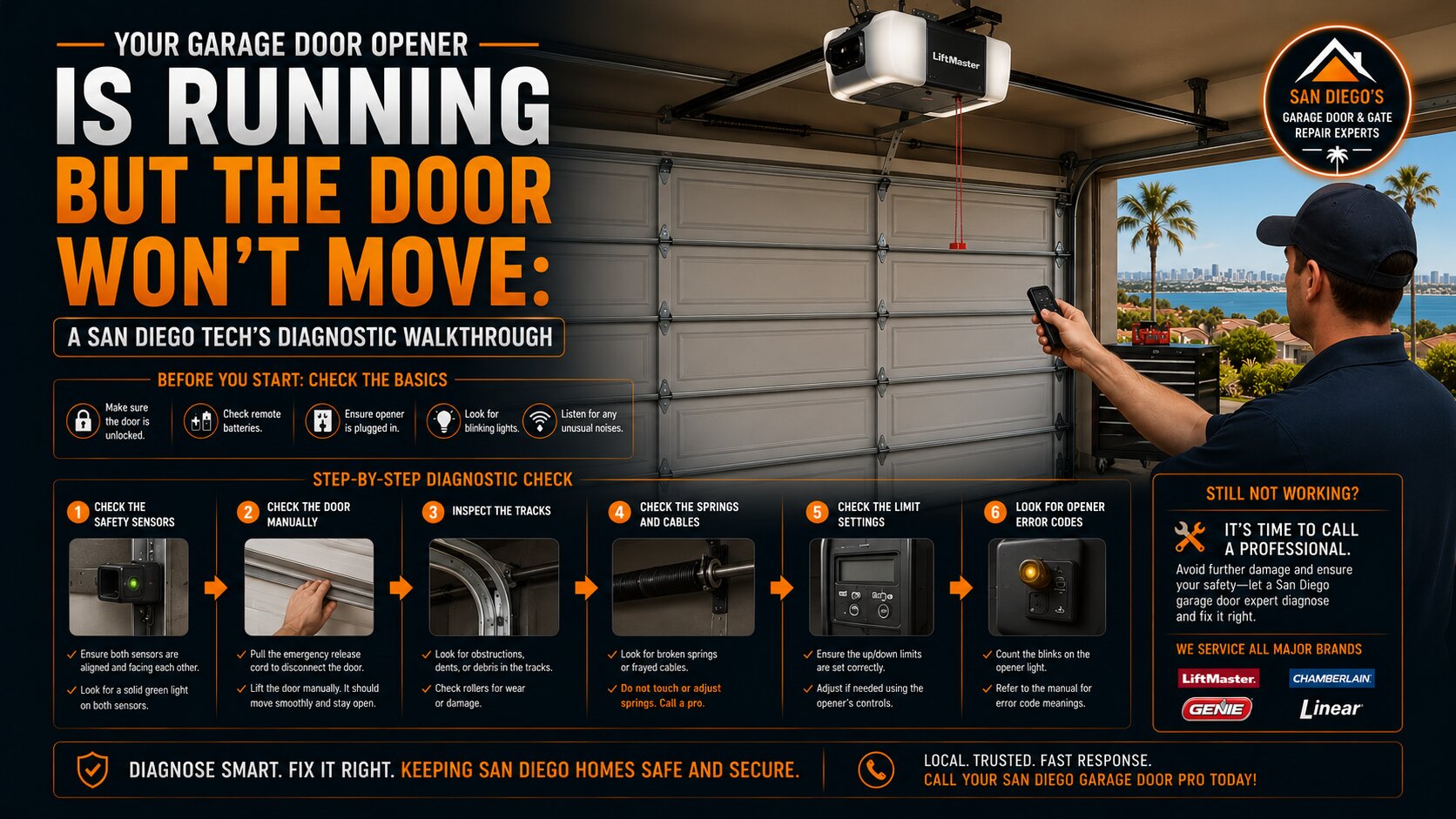
Remote problems can be frustrating, especially when you’re running late or coming home after a long day. If you’ve tried these troubleshooting steps and your remote still isn’t functioning, there may be a more complex issue with your opener’s logic board or wiring.
Our team at Best Garage Door has been serving San Diego homeowners for years, and we carry diagnostic equipment to pinpoint remote and receiver problems quickly. Whether you need residential service or Commercial Garage Door Repair, we’ll get your system working reliably again without unnecessary replacements or guesswork.
Contact us today for fast, professional service. We offer same-day appointments throughout San Diego County and stand behind all our repair work.




Leave A Comment