



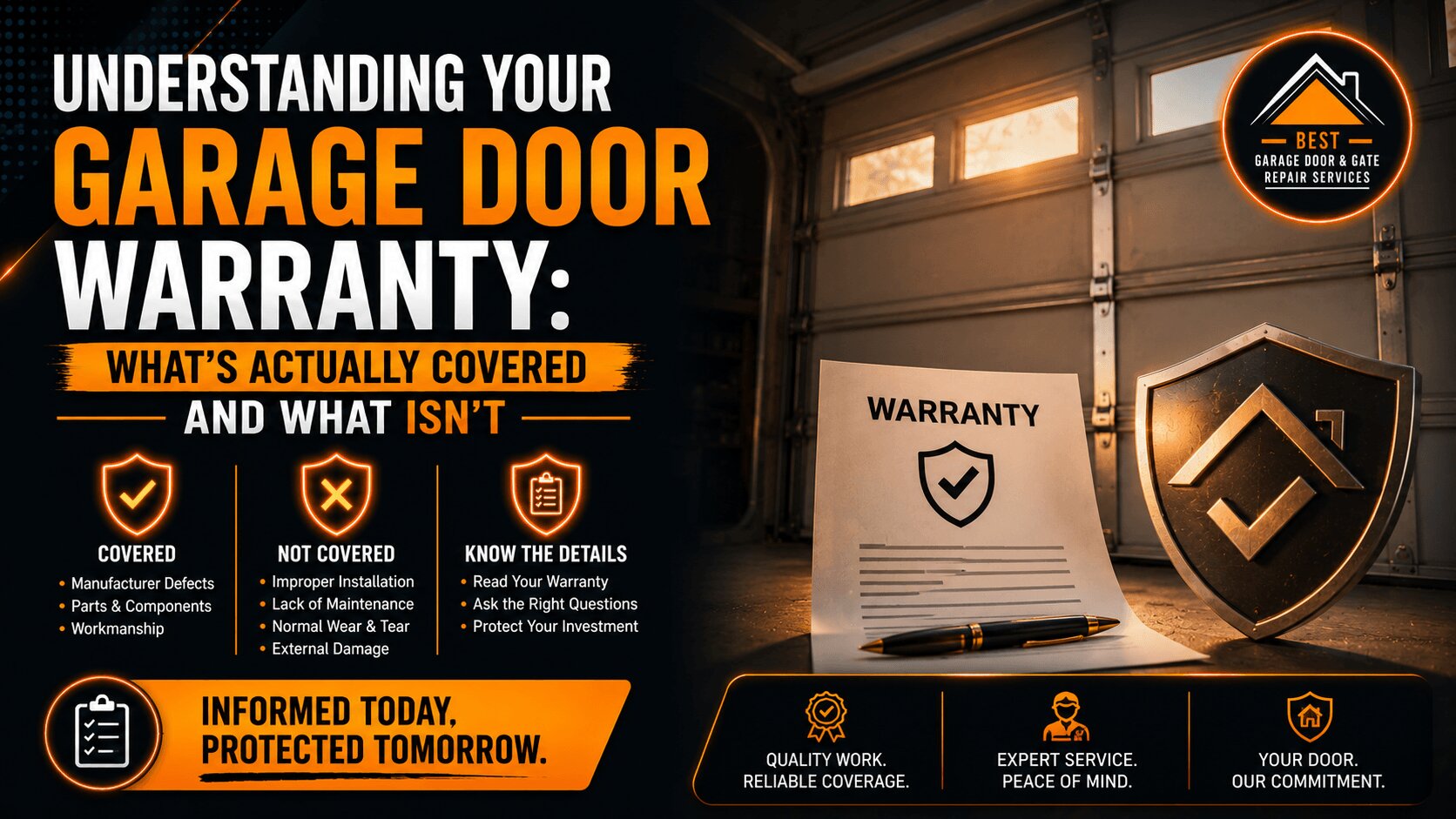
After installing hundreds of garage doors across San Diego County over the years, I’ve seen too many homeowners surprised when their warranty claim gets denied. They assumed everything was covered, only to discover the fine print tells a different story. Understanding your garage door warranty before you need it can save you hundreds or even thousands of dollars in unexpected repair costs.
Let me walk you through what warranties typically cover, what they don’t, and how to make sure you’re actually protected when something goes wrong.
What Does a Standard Garage Door Warranty Cover?
Most garage door warranties cover manufacturing defects in materials and workmanship for the door panels themselves. This typically includes issues like paint peeling prematurely, steel rusting through, or panels warping under normal conditions. The coverage period usually ranges from one to ten years depending on the door quality and manufacturer.
The garage door opener comes with a separate warranty, usually covering the motor and electronic components for one to five years. Premium models often include lifetime warranties on the motor but limited coverage on accessories like remotes and keypads.Here’s what our team at Best Garage Door typically sees covered under manufacturer warranties:
What About Spring and Cable Warranties?
Garage door springs are considered wear items, similar to tires on your car. Most spring warranties cover only one to three years, and many specifically state they cover “cycles” rather than years. A cycle is one complete opening and closing of your door.
Standard springs are typically rated for 10,000 cycles, which translates to about seven to ten years for average households. If your spring breaks after 8,000 cycles in two years, you might still be covered. If it breaks after three years of normal use, you probably aren’t. For more information on When To Replace Your Garage Door Springs, it’s important to know the warning signs before failure occurs.
The Big Gaps: What Most Warranties Don’t Cover
Salt air corrosion along the coast in areas like Pacific Beach or Point Loma usually isn’t covered, even though it’s a predictable issue. Wind damage from Santa Ana winds, accidental impact from vehicles, and normal wear and tear are all typically excluded.
Here are common exclusions I explain to every client:
How Can I Keep My Warranty Valid?
Nearly every garage door warranty requires regular maintenance to remain valid. If you file a claim and can’t prove you’ve maintained the door, the manufacturer can deny coverage.
We recommend San Diego homeowners schedule professional maintenance at least annually. Keep receipts and documentation of all service visits. Take photos of lubrication, adjustment work, and any issues you notice developing. If your door has derailed, understanding Why Your Garage Door Came Off The Track can help prevent future issues and maintain warranty coverage.
Always use authorized service providers for repairs during the warranty period. DIY repairs or hiring an unauthorized technician can void your entire warranty immediately, even for unrelated future issues.
Are Labor Costs Included in the Warranty?
Most manufacturer warranties cover parts only, not the labor to install replacement parts. Some premium brands include one year of labor coverage, but after that, you’ll pay for the technician’s time even if the part is free.
Installation warranties from your contractor are separate. Our installations at Best Garage Door include a workmanship warranty covering any issues related to how we installed your door, typically for one to two years. We also offer comprehensive Commercial Garage Door Repair services with clear warranty terms for business owners.
Making Your Warranty Work for You
The best warranty protection starts with choosing quality products and professional installation. I’ve seen too many homeowners in Mission Valley and Rancho Bernardo save money upfront with budget doors, only to face constant issues that aren’t covered.
Keep your warranty documents, purchase receipts, and maintenance records in one accessible place. Register your products with the manufacturer within 30 days of installation. Many warranties require registration to be valid.
If you’re unsure what your current warranty covers or you’re shopping for a new garage door in San Diego, our team at Best Garage Door is here to help. We’ll explain exactly what’s covered, recommend doors with the best warranty protection for your specific situation, and ensure proper installation so your warranty stays valid. We can also help you find quality Garage Door Parts that come with solid manufacturer warranties. Contact us today for a free consultation and let’s make sure your investment is truly protected.



Leave A Comment