After years of servicing garage doors across San Diego County, I can tell you that one of the most overlooked maintenance tasks is proper lubrication. When homeowners ask me how to prevent expensive repairs, my first recommendation is always a simple quarterly lubrication routine.
Most garage door problems I see in neighborhoods from Pacific Beach to Rancho Bernardo could have been prevented with the right lubricant applied to the right parts. Today, I’m sharing exactly what we use on every service call and which products will actually damage your system.
Why Regular Lubrication Matters for Your Garage Door
Your garage door moves up and down an average of 1,500 times per year. That constant movement creates friction on metal parts, which leads to wear, noise, and eventually component failure.
In San Diego’s coastal climate, salt air accelerates this wear on metal components. I’ve seen hinges and rollers corrode in just months without proper protection, especially in homes near the beach in Point Loma and Ocean Beach.
Proper lubrication reduces friction by up to 90%, extends the life of moving parts by years, and keeps your door operating quietly. It takes about 10 minutes and costs less than $15.
The Right Lubricant Makes All the Difference
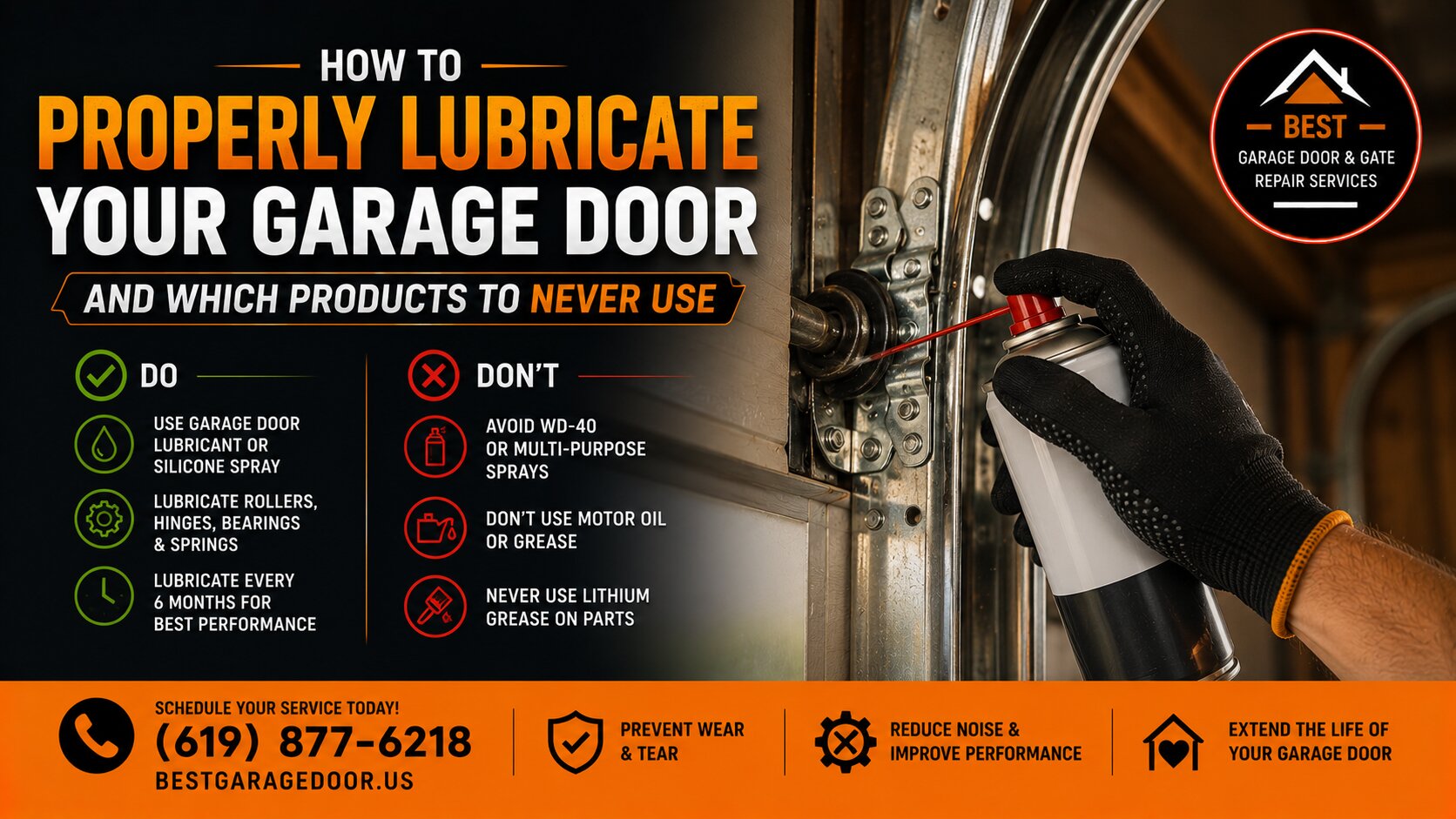
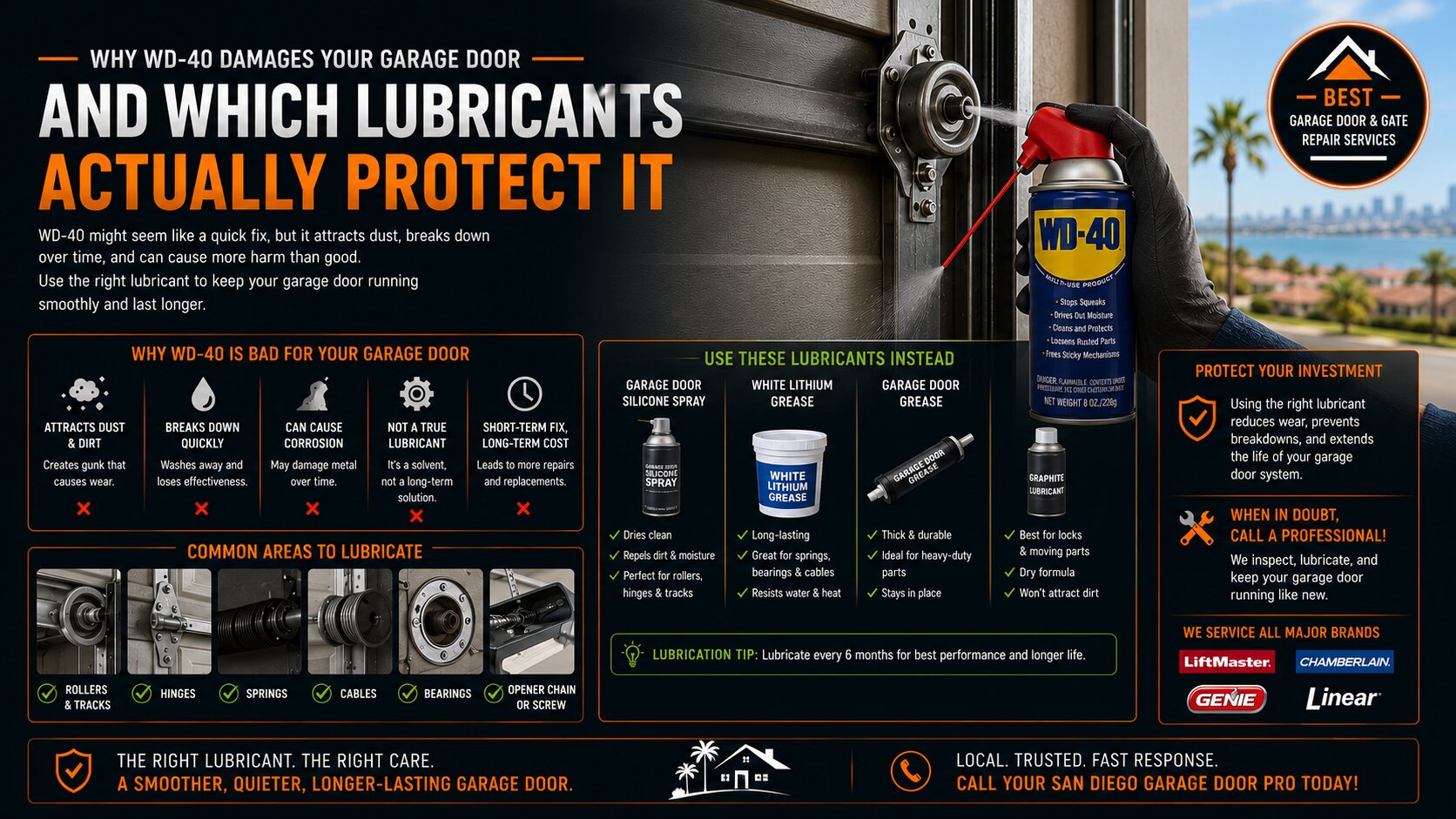
Use Only These Lubricants
Use only silicone-based spray lubricant or white lithium grease for garage doors. These products are specifically designed for metal-on-metal applications and won’t attract dirt or break down in heat. I keep both in my truck and use them on every job. Silicone spray works perfectly for most applications, while white lithium grease is ideal for spring coils and high-friction areas.
Never Use These Products
Never use WD-40, 3-IN-ONE oil, or any penetrating oils on your garage door. These are solvents, not lubricants, and they’ll actually strip away existing grease and leave parts unprotected.
Which Parts Need Lubrication (And Which Don’t)
Here’s exactly what I lubricate on every service call. Focus on these six areas for complete protection.
Torsion springs: Apply lubricant along the entire length of the spring coil while the door is closed. This is the most critical component to protect.
Roller bearings: Spray each roller where the wheel meets the stem. If you have nylon rollers, lubricate only the steel bearing inside, not the nylon wheel itself.
Hinges: Apply lubricant to the moving pivot point of each hinge where metal plates connect.
Track: Wipe the inside of the vertical tracks with a clean cloth, but don’t add lubricant. Excess lubricant on tracks attracts dirt and causes problems.
Lock mechanism: If you have a manual lock, spray lubricant into the keyhole and on the moving lock bar, which is especially important if you need to Secure Your Garage Door During A Power Outage.
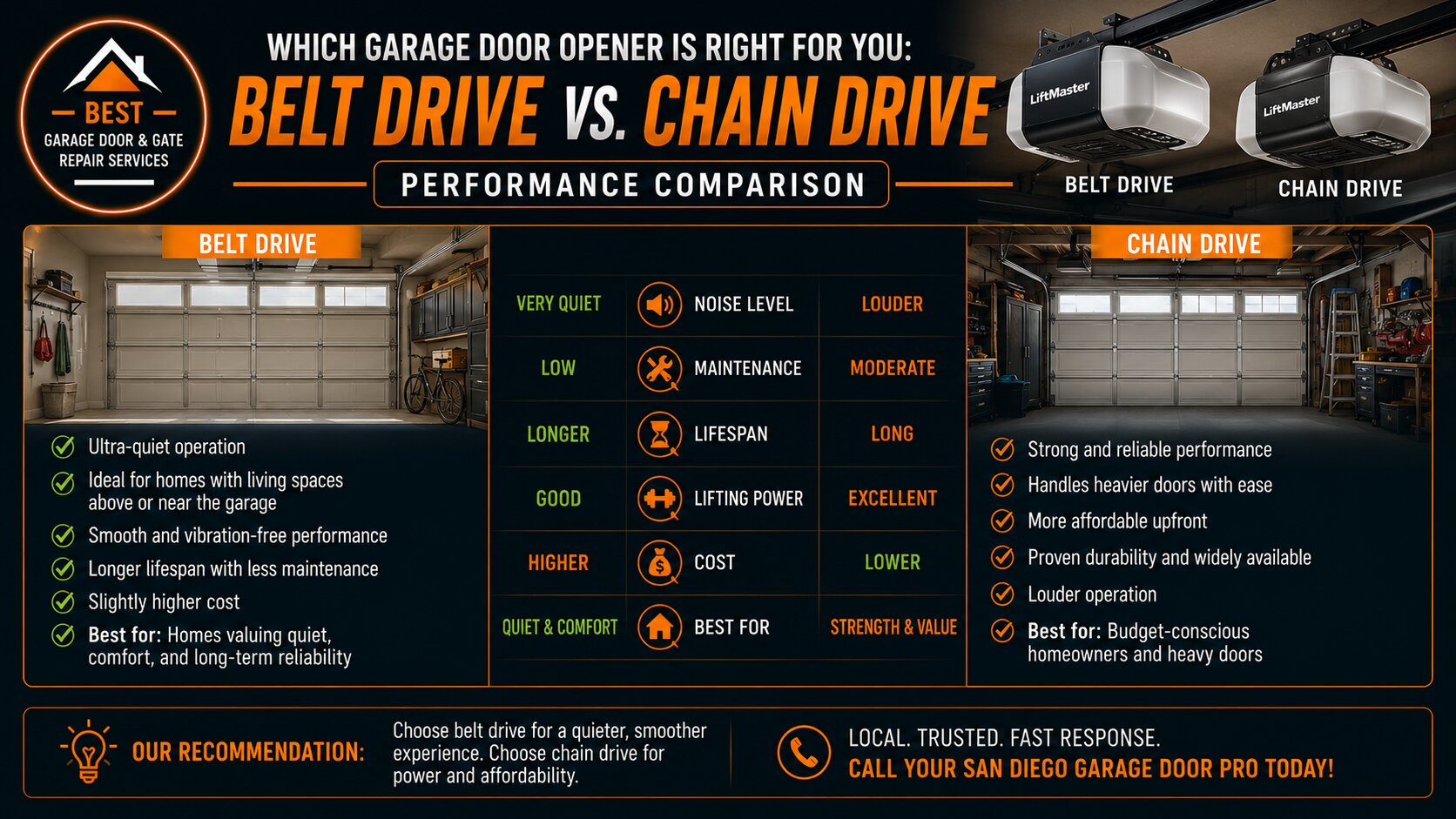
Opener chain or belt: For chain drives, apply lubricant to the top of the chain. Belt drives don’t require any lubrication.
How Often Should You Lubricate Your Garage Door?
Lubricate your garage door every three months for optimal performance. In Southern California, our warm summers and occasional Santa Ana winds can dry out lubricants faster than in cooler climates. I recommend setting a reminder for the first weekend of each season. This schedule keeps parts protected year-round and helps you catch small issues before they become expensive repairs.
If you notice squeaking or grinding between scheduled maintenance, that’s your door telling you it needs attention immediately. Don’t wait for your next scheduled lubrication.
Wipe down all metal parts with a clean cloth to remove dirt, dust, and old dried lubricant. This step is crucial because applying new lubricant over debris just traps contaminants against metal surfaces.
Apply lubricant sparingly to each component I listed above. Two-second bursts are plenty for most parts. Excess lubricant will drip onto your floor and attract more dirt.
After lubricating everything, manually open and close the door twice to work the lubricant into all moving parts. Then reconnect your opener and run a full cycle, just as you would when you Prepare For Your Garage Door Installation.
Let Our Team Handle Your Garage Door Maintenance
Proper lubrication is simple, but it’s just one part of comprehensive garage door maintenance. Our team at Best Garage Door includes full lubrication in every tune-up service we provide across San Diego.
If you’d rather have professionals handle this task, or if your door needs more than just lubrication, we’re here to help. We service both residential and Commercial Garage Door Repair needs, and we always stock quality Garage Door Parts. Contact Best Garage Door today to schedule a complete maintenance visit and keep your garage door running smoothly for years to come.
Gadi Zana - 20 Years Of Garage Door Experience - Best Garage Door, Locally Owned And Operated. We are a full-service garage door and gate installation and repair company with a dedication to superior customer service.










Leave A Comment