



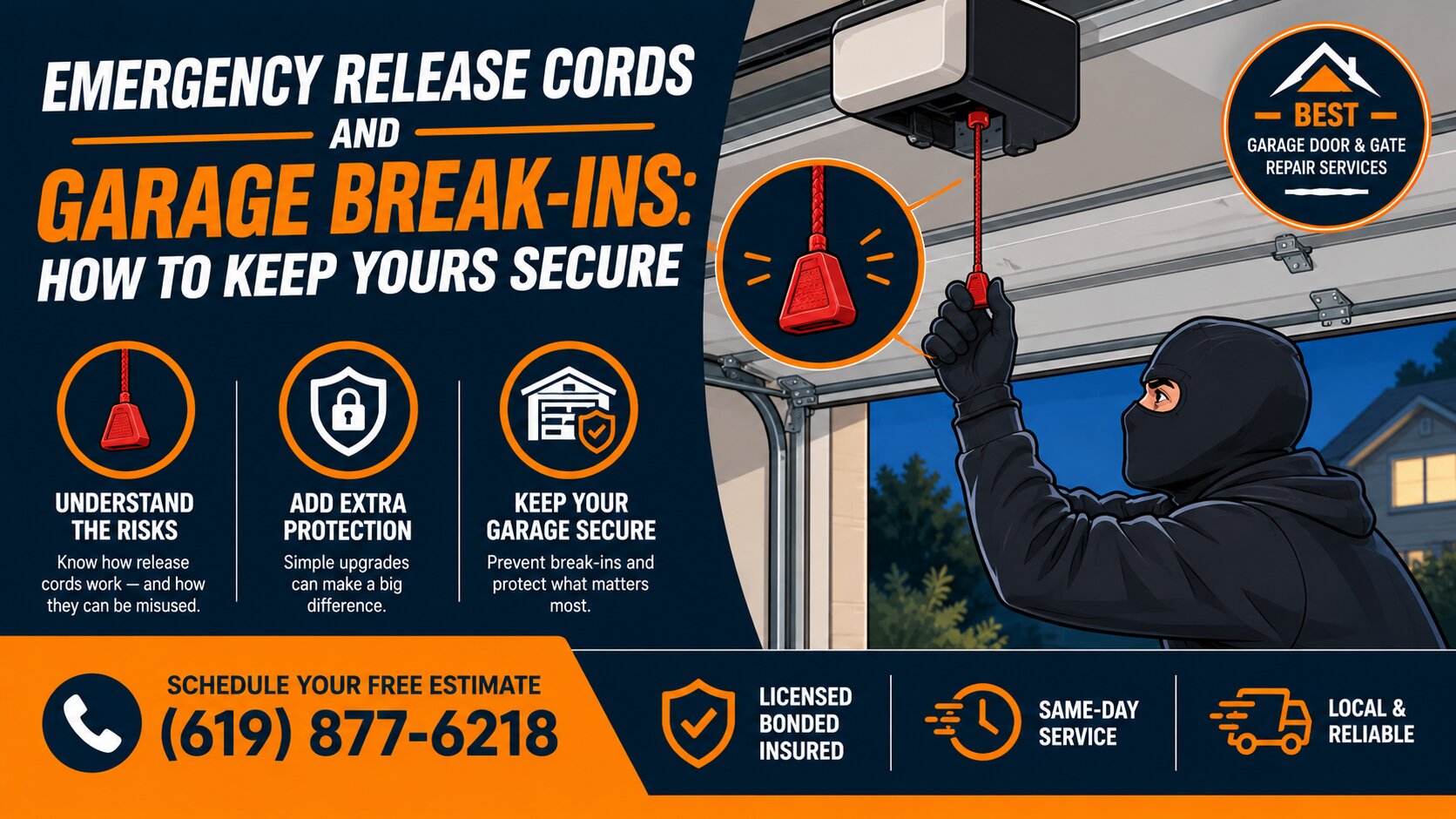
What Is the Emergency Release Cord?
The emergency release cord is the red handle hanging from a short rope near the garage door opener’s trolley. Pulling it disconnects the door from the opener carriage, letting the door move freely on its track by hand. This feature exists so the door can still be opened from inside the garage if the opener loses power or stops working.
The cord is a simple mechanical part, but its placement matters. If it hangs where it can be reached from outside the closed door, it can be used to release the opener’s grip on the door without authorization. Understanding how the cord works is the first step toward checking whether yours is positioned safely.
Can the Release Cord Be Reached From Outside?
Yes, in some setups the cord can be reached through a gap at the top corner of the door or through a small opening where the door meets its frame. A tool slipped through that gap can snag the cord and pull it, releasing the trolley from the opener arm. Once released, the door can often be lifted by hand from outside, since it is no longer locked to the opener.
This is why the gap between the door panel and the frame deserves attention. Check the top corner of the door and the space along the sides where the door meets the track. If daylight is visible through any of these gaps, a tool could potentially reach the cord or the trolley mechanism behind it.
Ways to Reduce the Risk
Several adjustments can lower the chance that the cord becomes an entry point, without making it unusable for the household. A technician can evaluate the door and opener together and recommend which option fits the setup.
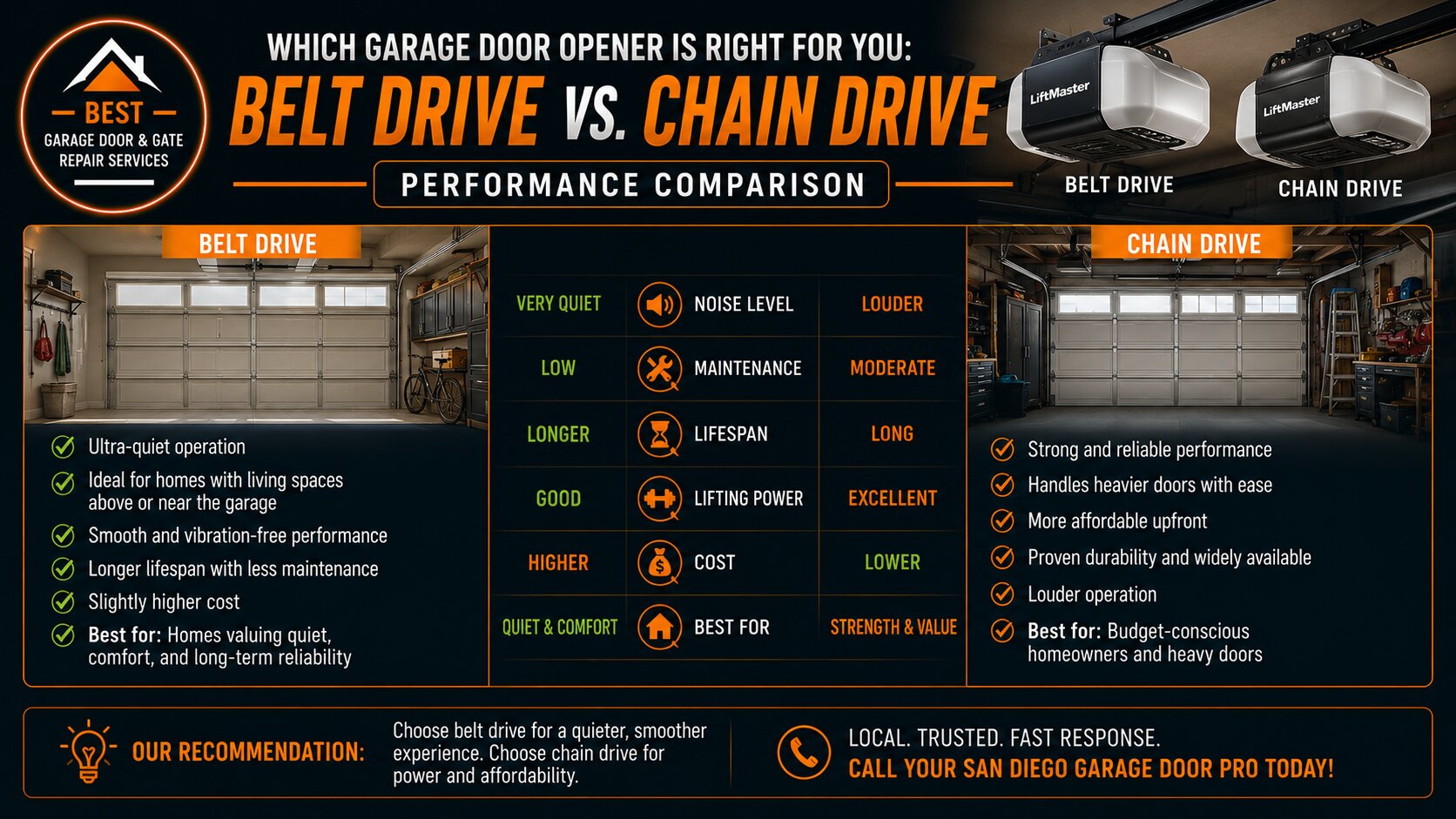
Any opener replacement or upgrade is a good moment to ask about these features directly. The Garage Door Openers available today vary in how their release mechanisms are built and protected, so comparing models before installation can prevent this issue later.
Why the Cord Must Stay Usable From Inside
Any fix for the cord’s exposure has to leave it fully functional from inside the garage. The cord is the only way to disconnect the door from the opener during a power interruption, and blocking or disabling it entirely would trap the door in place. Security measures should restrict outside access to the cord without affecting how it works when pulled from inside.
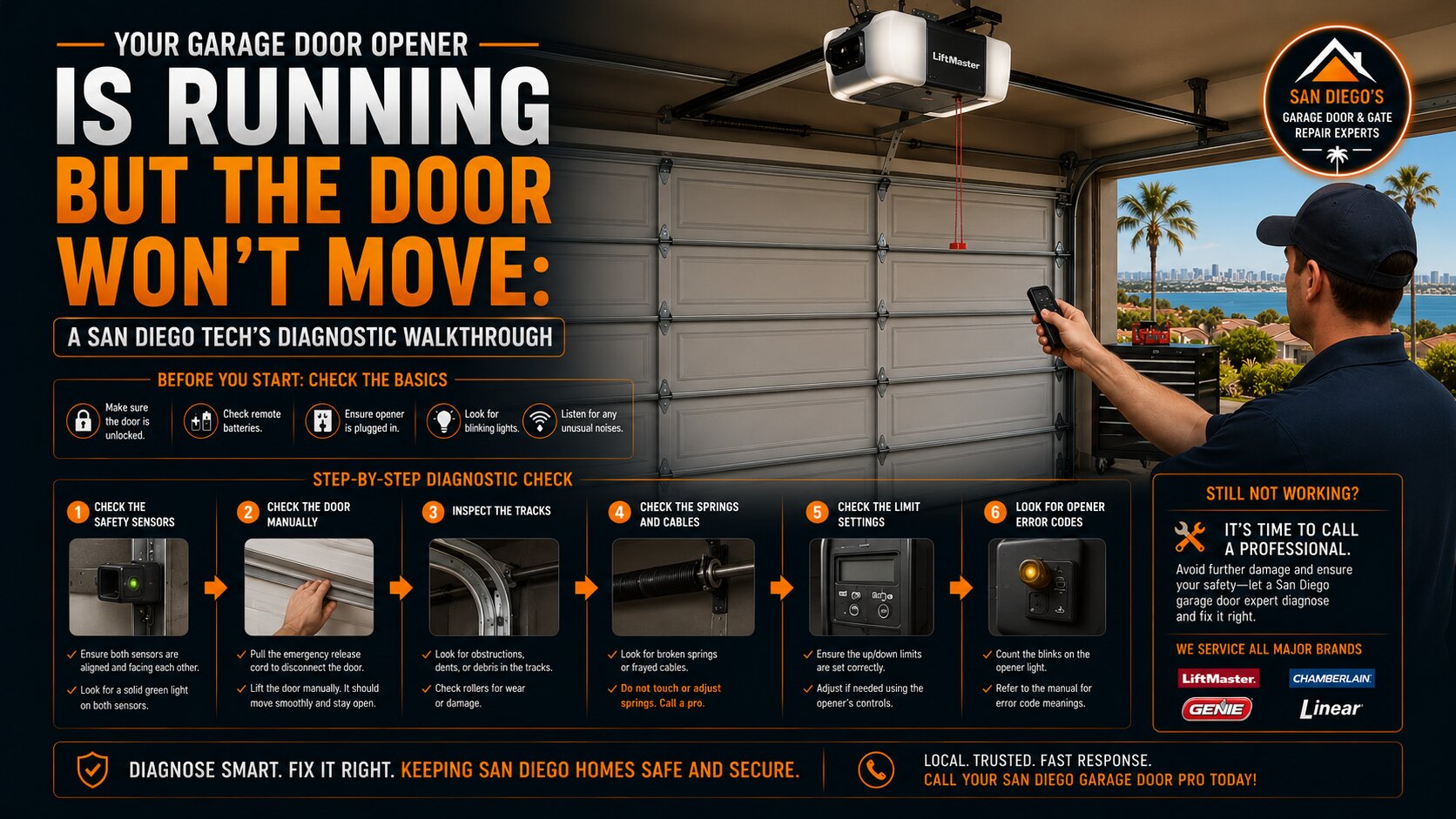
This balance is part of why adjustments to the release mechanism should go through a technician rather than a makeshift fix. A cord that is zip-tied out of reach or wrapped too tightly may become difficult to pull in a real situation. For guidance on what the manual process looks like once the door is disconnected, see this post on opening the door manually.
Checking the Rest of the Door
The release cord is only one part of a door’s overall security picture. Weatherstripping, panel alignment, lock hardware, and the opener’s own settings all play a role in how resistant the door is to tampering. For a broader look at these factors, read this post on garage door security.
If the door will not close fully, the opener reverses unexpectedly, or the trolley seems to release on its own, those are signs the system needs a closer look. In situations where the door is stuck open, won’t disconnect properly, or has visible damage near the track, prompt attention from Emergency Garage Door Services can help secure the opening until repairs are complete.
Get the Release Cord Checked
Best Garage Door & Gate Repair Services is licensed and insured, CSLB #1071980. Best Garage Door & Gate Repair Services serves San Diego County. Call us or send us a message if you have questions about your garage door or gate.






Leave A Comment