



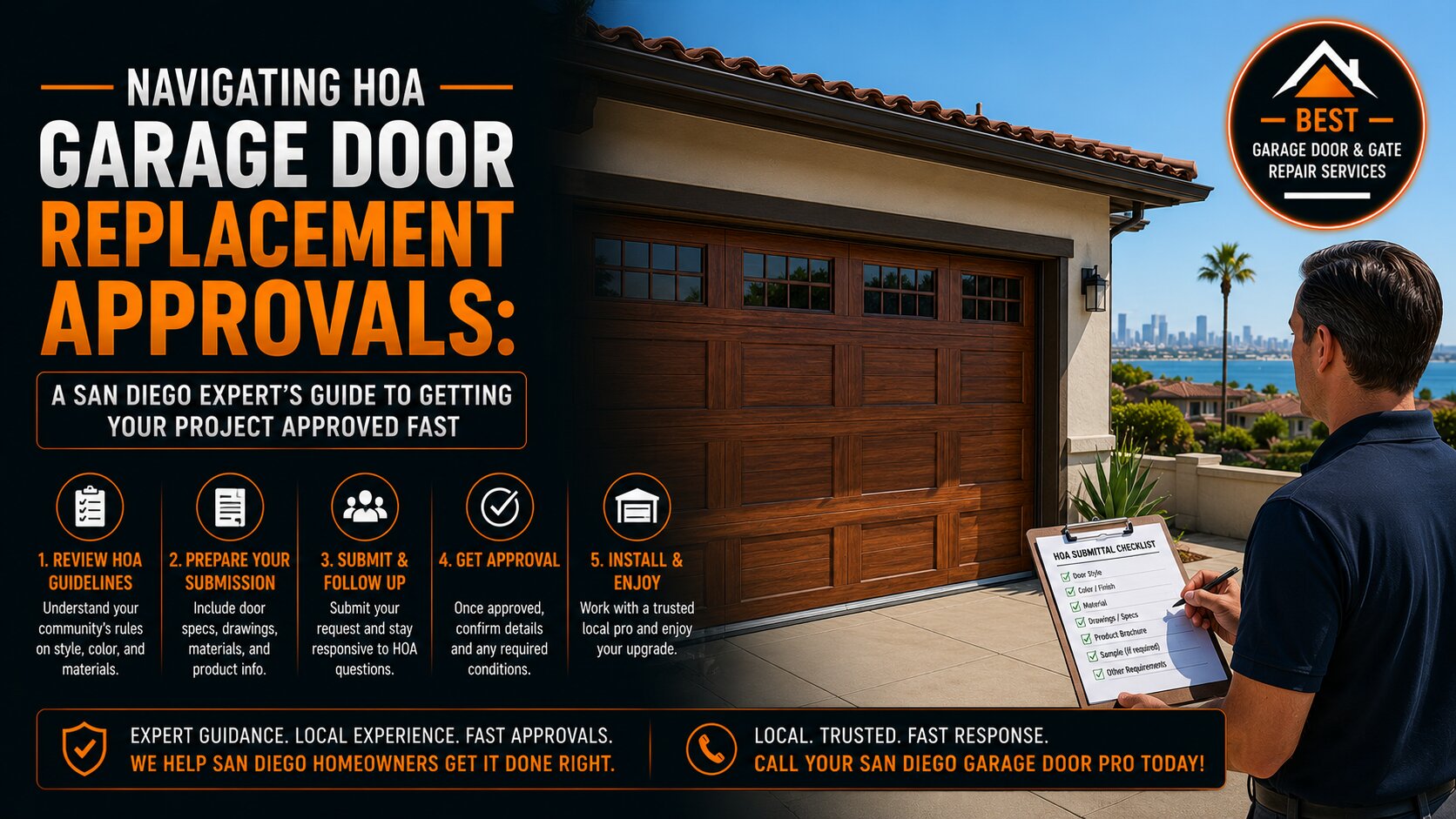
After years of helping homeowners in San Diego’s master-planned communities navigate garage door replacements, I’ve learned that the biggest challenge isn’t choosing the right door. It’s getting your HOA’s approval without delays, rejections, or frustration.
Whether you’re in Carmel Valley, Scripps Ranch, or Otay Ranch, I’ve guided hundreds of families through the architectural review process. Let me walk you through exactly how to get your garage door replacement approved quickly and correctly.
Understanding the Architectural Change Request Process
Every HOA-governed community in San Diego requires homeowners to submit an Architectural Change Request (ACR) before making exterior modifications. Your garage door is one of the most visible changes you can make, so expect thorough scrutiny from your Architectural Review Committee (ARC).
The typical timeline runs two to six weeks from submission to approval. I’ve seen faster turnarounds in communities like Rancho Bernardo where the HOA maintains pre-approved door lists, and longer waits in neighborhoods with monthly ARC meetings.
What Your HOA Actually Wants to See
Most San Diego HOAs care deeply about maintaining community cohesion. They’re protecting property values by ensuring your new door doesn’t clash with the neighborhood aesthetic.
I always include manufacturer spec sheets showing exact color codes (not just names like “almond” or “sandstone”). We provide physical samples when possible, especially for custom colors or finishes that don’t photograph well, along with detailed information about Garage Door Parts to ensure complete transparency with the ARC.
High-quality photos of similar installations in comparable homes help tremendously. When we replaced doors in Chula Vista’s Eastlake community, showing the ARC examples from nearby streets cut our approval time in half.
Common HOA Restrictions in San Diego Communities
Understanding options like Window Tinting For Garage Doors can help you maintain privacy while meeting HOA requirements.
Does Your HOA Have a Pre-Approved List?
Yes, and using it is your fastest path to approval. Many established San Diego communities maintain lists of specific door models, colors, and configurations that automatically qualify for expedited review.
I always check with the HOA management company before starting any project. In Rancho Bernardo, for example, several communities have approved specific Clopay and Amarr models that homeowners can order without full ARC review.
If your desired door isn’t on the pre-approved list, don’t panic. You can still submit it for consideration, but build in extra time for the review process.
Working with a Contractor Who Knows the Process
Our team has learned that providing complete, professional documentation makes or breaks HOA approvals. We prepare everything the ARC needs: technical drawings, installation timelines, contractor licensing verification, and neighbor notification letters.
We’ve built relationships with property management companies throughout San Diego County. These connections help us understand each community’s specific preferences and pain points before submitting applications, whether for residential projects or Commercial Garage Door Repair in HOA-managed business complexes.
I always advise homeowners to attend their ARC meeting if possible. Putting a face to the application and answering questions in person often smooths the approval process, especially for non-standard requests.
Strategies That Get Difficult Projects Approved
Get Expert Help Navigating Your HOA Approval
Don’t let HOA requirements intimidate you into keeping that old, failing garage door. With proper preparation and complete documentation, most applications sail through approval, and understanding factors like R-Value For Your Garage Door can help you make informed choices that satisfy both energy efficiency needs and HOA standards.
Our team at Best Garage Door has successfully navigated hundreds of HOA approvals across every major San Diego master-planned community. We handle the entire ACR process, from initial paperwork to final installation, ensuring your project meets every requirement while delivering the door you actually want. Contact us today, and let’s get your garage door replacement approved right the first time.








Leave A Comment