



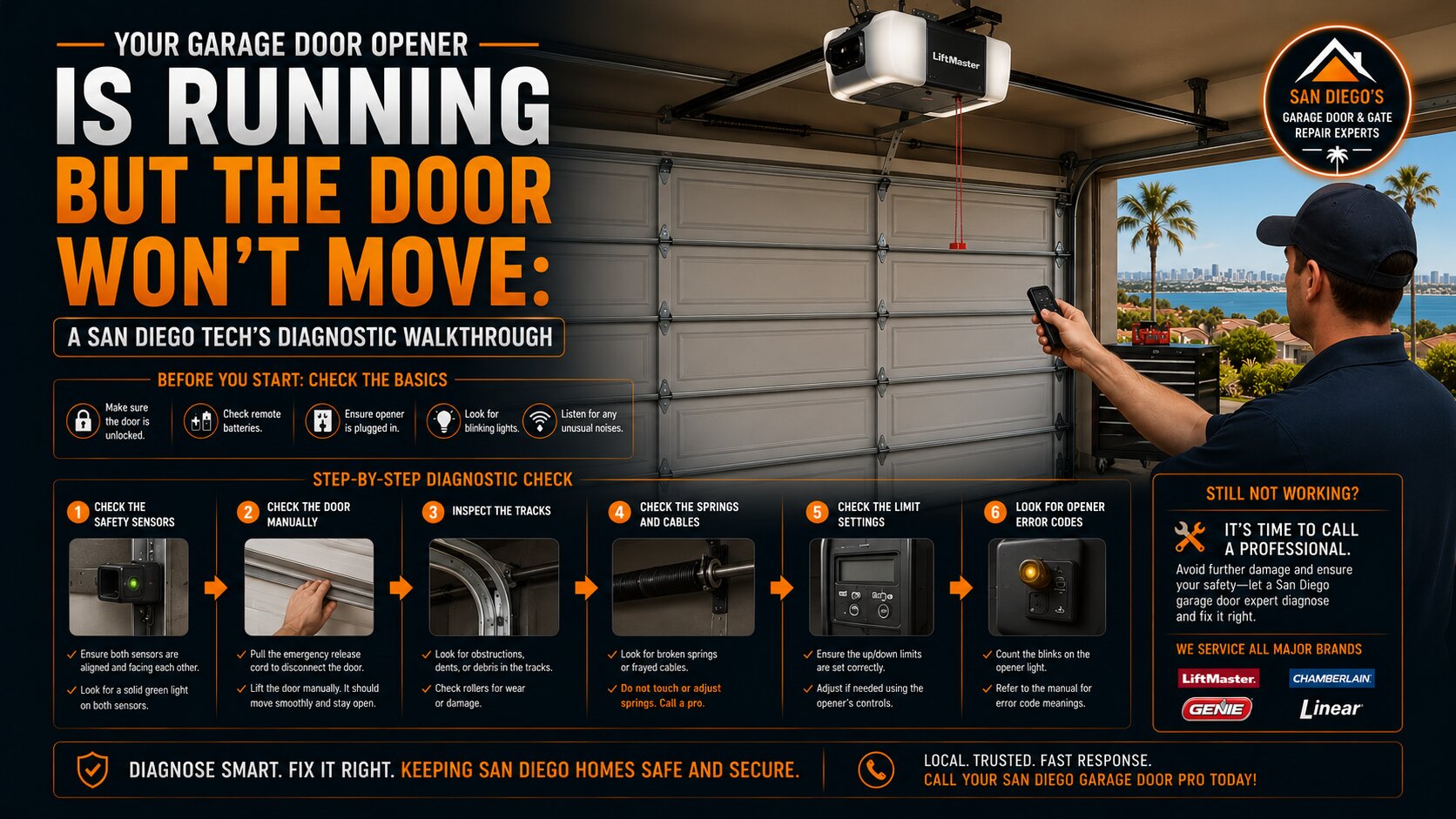
I get calls every week from frustrated homeowners across San Diego County who tell me the same thing: “My garage door opener sounds like it’s working, but the door isn’t moving.” If you’re hearing clicking, humming, buzzing, or whirring sounds from your opener but the door stays put, you’re dealing with one of several common failures. Let me walk you through the diagnostic process I use every day.
This situation is both concerning and confusing for homeowners. The noise tells you power is reaching the opener, but something in the mechanical chain between the motor and the door has failed.
Start with the Easy External Checks First
Before we assume internal opener damage, I always check three external issues that homeowners can safely inspect themselves. These account for about 30% of the “opener running but door not moving” calls I receive in Mission Valley, Pacific Beach, and throughout San Diego.
How to Test if Your Springs Failed
With the door closed and the opener disconnected (pull the red release handle), try manually lifting the door about three feet. A properly balanced door should stay in place when you let go. If it crashes down or feels impossibly heavy, you have a spring failure, not an opener problem.
Spring replacement requires professional equipment and training. I’ve seen too many DIY attempts in North Park and Hillcrest end in serious injury. This is always a job for a licensed technician, whether for residential or Commercial Garage Door Repair needs.
Internal Opener Failures: The Stripped Drive Gear
If you’ve ruled out external causes, the most common culprit is a stripped nylon drive gear inside the opener housing. This plastic gear connects the motor shaft to the drive mechanism that moves the trolley. After years of use, especially in Southern California’s warm climate that can make plastic more brittle, this gear wears down and eventually strips completely.
When this happens, the motor spins freely (making a whirring or buzzing sound) but doesn’t engage the drive system. The trolley never moves. This typically affects openers that are 10 to 15 years old, though I’ve seen it happen sooner on heavily used doors.
Replacing the drive gear requires disassembling the opener housing and having the correct replacement part for your specific model. This is internal opener work that requires a technician with access to quality Garage Door Parts to ensure proper function.
Why Is My Garage Door Opener Humming But Not Starting?
A humming sound that doesn’t transition into normal operation indicates a failed start capacitor. The capacitor provides the electrical boost needed to get the motor spinning from a dead stop. When it fails, the motor receives power and hums but can’t overcome the initial resistance to start turning.
This is especially common after power outages or electrical surges, which we occasionally see during Santa Ana wind storms in San Diego. The capacitor is a relatively inexpensive component, but accessing and replacing it safely requires opening the electrical housing and working with capacitors that can hold a dangerous charge even when unplugged.
Less Common Internal Failures
When to Call Best Garage Door for Professional Diagnosis
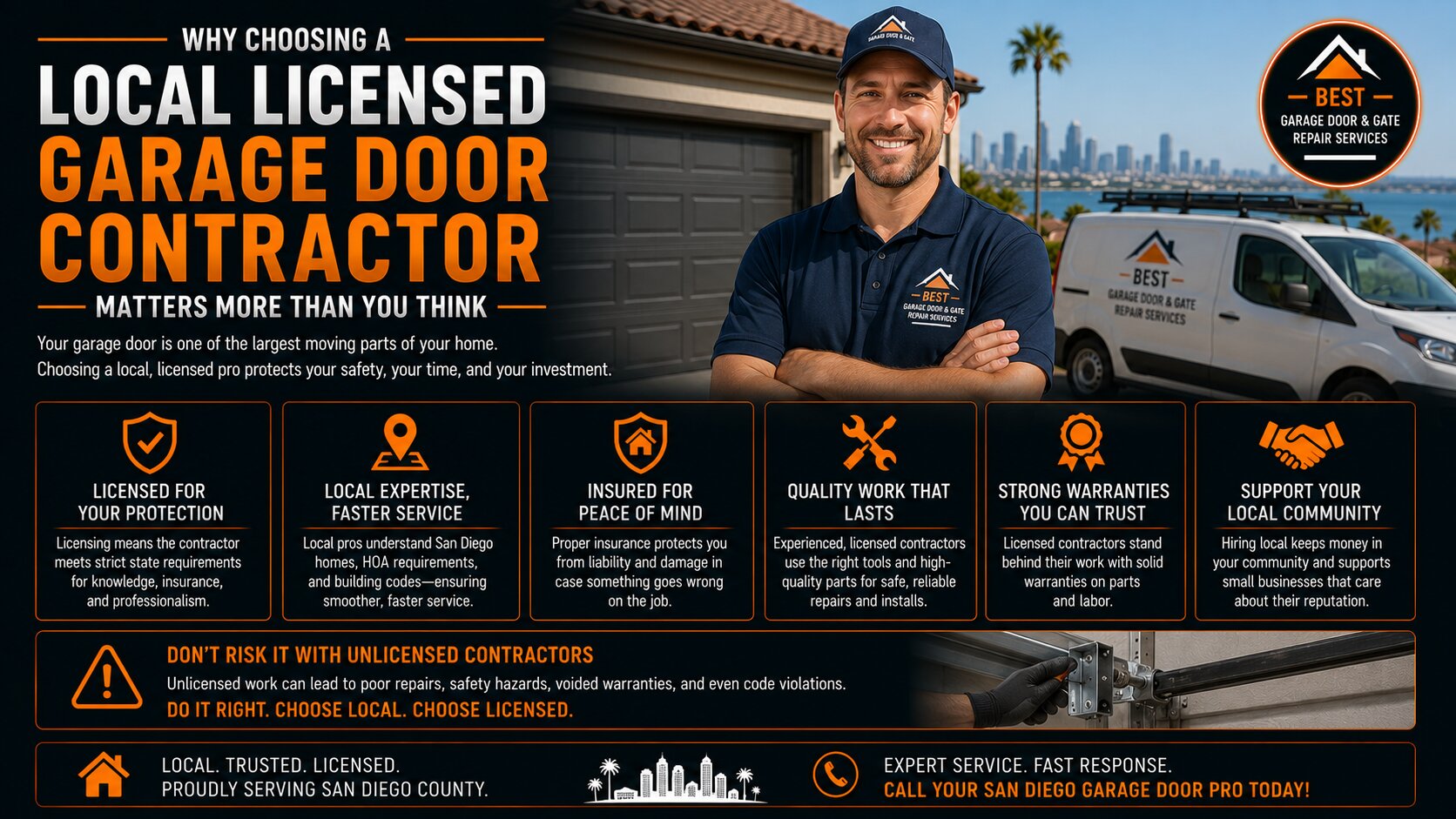
Any repair that requires opening the opener housing, working with electrical components, or accessing internal gears should be handled by a professional. Our team at Best Garage Door serves homeowners throughout San Diego with same-day diagnostic service for these exact situations.
We carry the most common replacement parts on our trucks and can usually complete repairs during the initial service call. More importantly, we can safely diagnose whether your opener needs a simple repair or complete replacement, saving you money and preventing the safety risks of DIY opener work.
If your garage door opener is making noise but your door won’t move, contact Best Garage Door today. We’ll walk you through safe troubleshooting steps over the phone and schedule a technician visit if needed. Our experienced team has seen every variation of this problem across San Diego County, from opener issues to Damaged Garage Door Panel Replacement needs, and can get your door working safely again.




Leave A Comment