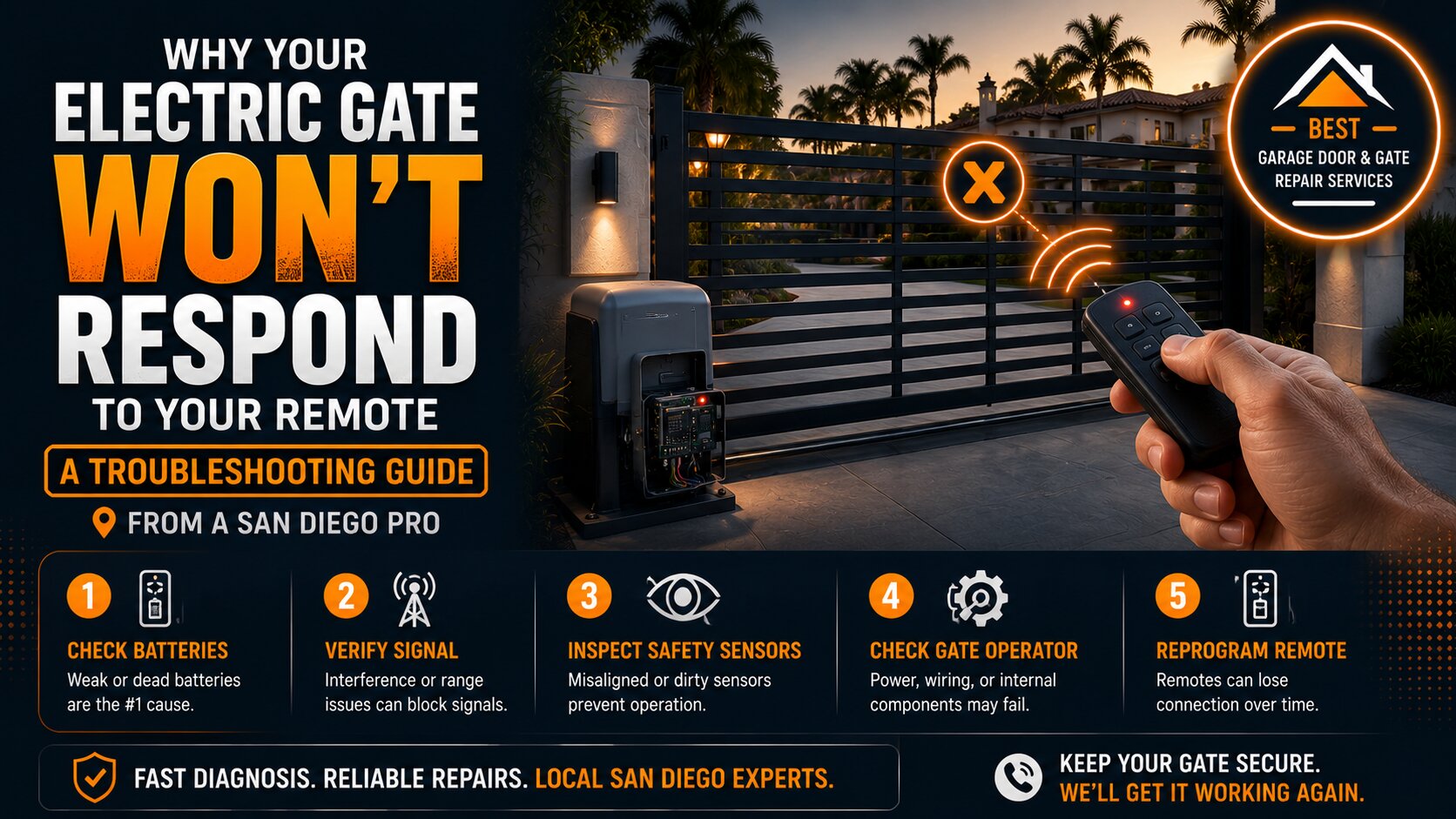
I’ve responded to countless emergency calls over the years from homeowners locked out of their properties when their electric gates stopped working. Whether it’s a planned power outage, a tripped breaker, or a complete system failure, knowing how to use your emergency release key can save you hours of frustration and potentially hundreds of dollars in emergency service fees.

In San Diego, where our grid is generally reliable but not immune to disruptions, every electric gate owner should understand their emergency release system. Let me walk you through everything you need to know about these critical backup mechanisms.

What Is an Emergency Release Key and How Does It Work?

An emergency release key is a specialized tool that allows you to manually disengage your gate’s motor and move it by hand during a power failure. Most electric gates have a key-operated release mechanism installed on the motor housing or near the gate operator.

When you insert and turn this key, it disconnects the motor from the gate’s drive mechanism. This puts your gate into manual mode, letting you slide or swing it open without electrical power. Once power returns and you re-engage the system, the motor reconnects and automated operation resumes.

Our team installs emergency release systems on every Gate Opener we service throughout San Diego County. It’s not just convenient but essential for safety and security during California’s occasional power disruptions.

What Is an Emergency Release Key and How Does It Work? - Emergency Release Keys: What to Do When Your Electric Gate Loses Power
What Is an Emergency Release Key and How Does It Work?

Where to Find Your Emergency Release Key

Most gate installers provide one or two emergency release keys at the time of installation. These keys typically have a triangular or square head, distinguishing them from standard door keys.

If you’ve recently purchased a home in Mission Valley, Rancho Bernardo, or anywhere else in Southern California with an existing gate, check these common locations for your key. Look in the garage near other utility keys, inside your home’s utility drawer, or attached to your original gate documentation.

I always tell clients to make a spare and keep one inside your vehicle and another inside your home. Never store your only emergency key outdoors where it could be stolen or damaged by coastal humidity.

How Do I Use My Emergency Release Key to Open My Gate?

To manually operate your gate during a power outage, locate the release mechanism on your gate motor. Insert your emergency release key into the lock cylinder and turn it 90 degrees, which disengages the motor from the drive system.

Where to Find Your Emergency Release Key - Emergency Release Keys: What to Do When Your Electric Gate Loses Power
Where to Find Your Emergency Release Key

You’ll typically hear a click or feel the mechanism release. At this point, you can manually slide or swing your gate open. The gate should move freely without resistance, though heavier gates may require some effort.

When power returns, simply close your gate manually to the desired position and turn the key back to re-engage the motor. Test the automatic operation to ensure everything reconnects properly.

Common Problems with Emergency Release Systems

The most frequent issue I encounter is corroded release mechanisms, especially in Pacific Beach, Point Loma, and other coastal areas where salt air takes its toll. Regular lubrication with a silicone-based spray prevents seizing and ensures smooth operation when you need it most.

Lost keys are another common problem. If you can’t locate your emergency release key, contact your gate’s manufacturer or a professional service provider. We can often identify your lock type and order replacement keys based on your motor model.

Common Problems with Emergency Release Systems - Emergency Release Keys: What to Do When Your Electric Gate Loses Power
Common Problems with Emergency Release Systems

Sometimes the release mechanism itself fails. If turning your key doesn’t disengage the motor, or if the gate remains locked even in manual mode, don’t force it. This could indicate a more serious mechanical problem requiring Professional Attention And Warning Signs.

Preventing Emergency Access Issues Before They Happen

We recommend testing your emergency release system twice a year, ideally during spring and fall. This simple maintenance check ensures the mechanism works smoothly and familiarizes household members with the process.

Label your emergency key clearly and store it where everyone in your home knows to find it. Consider installing a battery backup system for your gate operator if frequent access during outages is important to you.

Schedule annual professional maintenance to inspect all mechanical components, including your emergency release system. During San Diego’s warm summers, moving parts can dry out and seize without proper lubrication, much like How Weather Affects Your Garage Door.

Preventing Emergency Access Issues Before They Happen - Emergency Release Keys: What to Do When Your Electric Gate Loses Power
Preventing Emergency Access Issues Before They Happen

When to Call for Professional Help

If your emergency release key is lost, broken, or won’t disengage the motor, it’s time to call in experts. Attempting to force frozen mechanisms or disassemble your gate operator without proper knowledge can cause expensive damage.

At Best Garage Door, we’ve helped countless San Diego homeowners regain access to their properties during emergencies. We stock replacement keys for most major gate operators and can service or replace faulty release mechanisms quickly.

Don’t wait until you’re locked out during a power outage. Contact us today to verify your emergency release system is functioning properly and to get spare keys made. We’re here to ensure you always have reliable access to your property, no matter what happens to the power grid, with our Emergency Garage Door Services.