



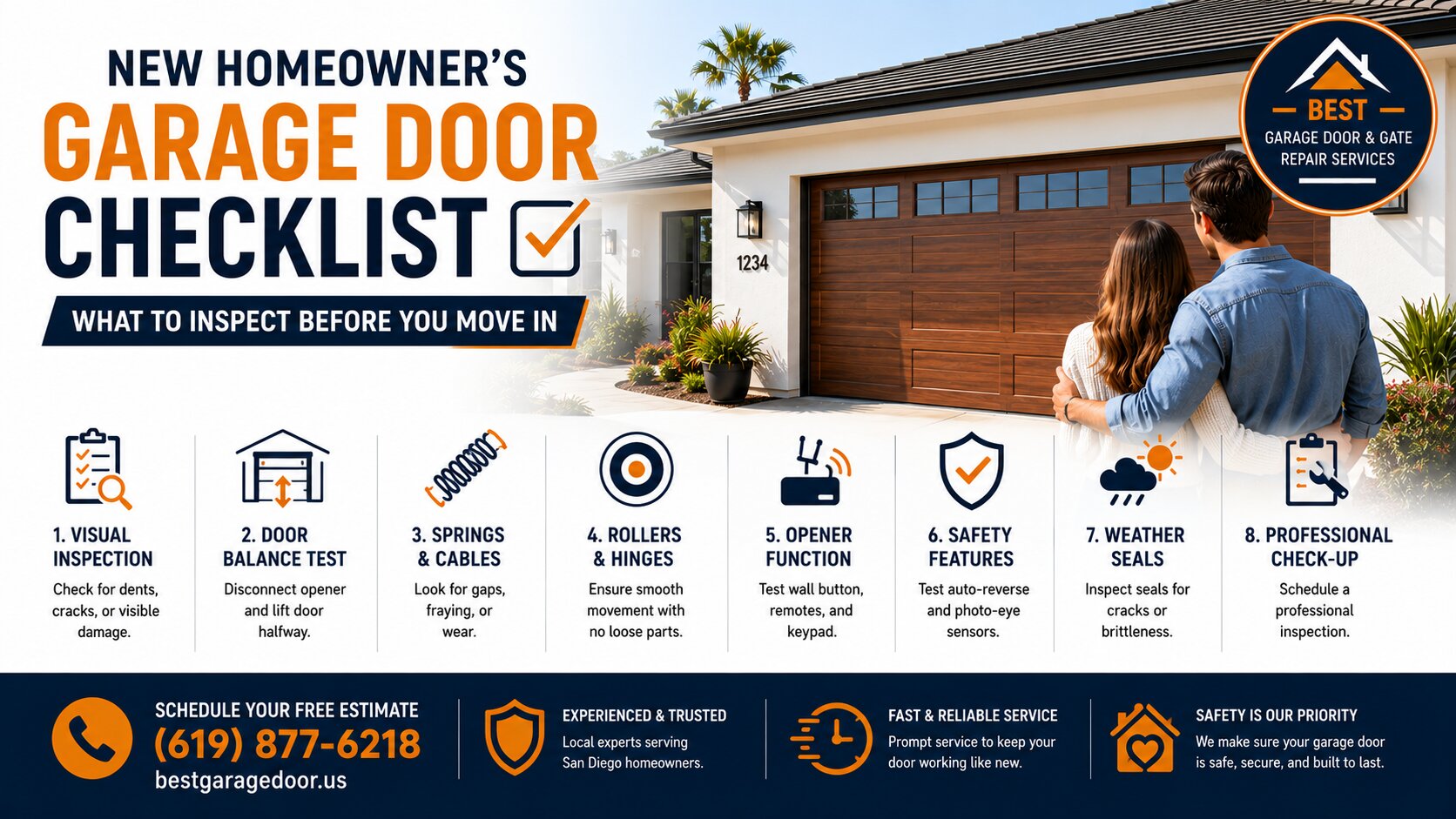
As someone who has inspected hundreds of garage doors for new homeowners throughout San Diego, I can tell you that the garage door is one of the most overlooked elements during home inspections. Yet it’s also one of the most expensive systems to replace, often costing thousands of dollars.
When we receive calls from panicked new homeowners dealing with broken springs or failed openers just weeks after closing, it’s usually because no one properly evaluated the garage door beforehand. This complete garage door buyer’s checklist will help you avoid that costly mistake.
What Should I Check First on a Garage Door Before Buying a Home?
The first thing you should check is the age of the garage door opener and spring system. These are the two most expensive components to replace, and knowing their condition can give you negotiating power or help you budget for upcoming replacements.
Most garage door springs last 7 to 10 years with normal use. Openers typically last 10 to 15 years. If either component is near the end of its expected lifespan, factor replacement costs into your offer or request credits from the seller.
Inspect the Door’s Physical Condition and Material
Look for rust spots, dents, cracks, or warping. Wood doors may show rot or water damage, especially along the bottom panels. These issues aren’t just cosmetic; they affect insulation, security, and operation.
Check the weather stripping along all edges. Damaged seals allow moisture, pests, and outdoor air into your garage, reducing energy efficiency in Southern California’s warm climate.
Test the Door’s Balance and Operation
Here’s a critical test that most home inspectors skip: disconnect the opener and manually lift the door halfway. A properly balanced door should stay in place without assistance.
If the door slams down or shoots up, the springs are improperly adjusted or failing. This is a safety hazard and an immediate red flag that professional service is needed.
Reconnect the opener and watch the door operate through several complete cycles. Listen for grinding, scraping, or squealing noises that indicate worn rollers, damaged tracks, or failing bearings that may require Garage Door Parts replacement.
Evaluate the Garage Door Opener System
Check for Proper Insulation
If the garage shares a wall with living spaces or you plan to use it as a workshop, insulation matters. Insulated doors maintain more stable temperatures, which is valuable even in San Diego’s mild climate.
Look for an R-value rating on the door. Insulated doors typically have R-values between 12 and 18. Uninsulated doors have no rating and offer minimal thermal protection.
Review Safety and Security Features
Modern garage doors should have rolling code technology in the opener, which prevents thieves from capturing and copying your remote signal. Older fixed-code systems are vulnerable to code grabbing devices.
Examine the emergency release mechanism. Pull the red handle to ensure it disengages smoothly and you can manually open the door. This is your backup access method during power failures or emergencies, and understanding these mechanisms is important whether you have a residential or Commercial Garage Door Repair system.
If the home has a door connecting the garage to the house, verify it has a quality deadbolt lock. This is often your home’s most vulnerable entry point.
Move Forward with Confidence
This garage door buyer’s checklist gives you the knowledge to make informed decisions about your potential new home. When you spot issues during your inspection, you have options: negotiate repairs, request closing credits, or budget for immediate replacement.
Our team at Best Garage Door has helped countless new homeowners throughout San Diego evaluate and upgrade their garage door systems. If you’re inspecting a home or just moved in and discovered problems, we’re here to provide honest assessments and expert solutions, including guidance on How To Prepare For A New Garage Door Installation. Contact us today for a comprehensive inspection and free estimate.





Leave A Comment